In the global HVACR industry, a technological transformation driven by environmental policies is accelerating. A series of policies, including the EU's F-Gas regulation and the US EPA's SNAP program, are forcing the industry to accelerate the phasing out of traditional high-GWP refrigerants and embrace low-GWP newcomers such as R32, R454B, and R290.
While these new refrigerants bring environmental benefits, their varying degrees of flammability also pose unprecedented challenges to equipment safety. It is against this backdrop that MFrontier MGD11 series of miniature refrigerant leak monitoring sensors was developed. It is not only a safety detection tool but also a key component helping HVACR manufacturers confidently address compliance requirements in the global market.
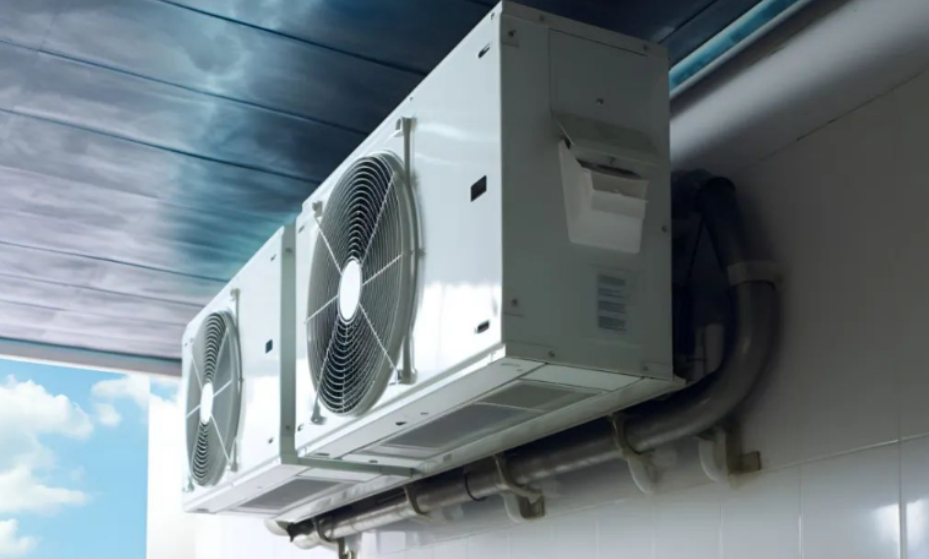
01 Multiple Risks Force Industry Transformation
The current HVAC-R industry faces urgent challenges stemming from a complex interplay of safety, compliance, and economic factors.
On the one hand, the threat of refrigerant leaks remains severe. Whether it's mildly flammable (A2L) refrigerants like R454B and R32, or highly flammable (A3) natural refrigerants like R290, leaks that accumulate to dangerous concentrations (e.g., R290's lower explosive limit is 2.1%) can lead to safety incidents. Meanwhile, even traditional R134A has an extremely high greenhouse effect potential (1 kg R134a is equivalent to 1300 kg CO2), and leaks directly result in high environmental costs and operating expenses.
On the other hand, traditional detection methods are becoming inefficient. Detection methods relying on manual soap bubbles or halogen guns are not only slow to detect minute leaks, but their high labor costs and hours of equipment downtime also impose a heavy, hidden operational burden on companies.
The biggest driving force, however, comes from increasingly stringent mandatory regulations worldwide. From the EU's F-Gas regulations, which aim to reduce high-GWP refrigerants by 80% by 2030, to the US's SNAP program, which specifies a timeline beyond 2025, these policies directly determine whether equipment can enter the mainstream market. Using compliant refrigerants and providing reliable safety monitoring is no longer a bonus, but a prerequisite for a company's survival.
02 Shortcomings of Traditional Protection Methods
Faced with the potential leakage risks of new refrigerants such as R32 and R454B, traditional safety measures and detection methods are showing significant shortcomings. For a long time, both residential air conditioners and commercial HVAC systems have relied almost entirely on passive design and post-incident investigation for refrigerant leak protection.
The systems themselves lack proactive and continuous monitoring capabilities. Leaks are often only discovered when equipment noticeably stops cooling, energy efficiency drops abnormally, or during routine maintenance. By this time, the leak may have been ongoing for weeks or even months, causing both economic losses and allowing safety risks to fester.
For residential users, there are almost no effective means to detect early leaks independently. They can only rely on abnormal noises or lack of cooling from the equipment, which are already late-stage signs of malfunction. While commercial systems may have periodic manual leak checks, commonly used methods such as soapy water leak detection are extremely inefficient and cannot detect slow, minute leaks.
Electronic leak detectors require professional operation, cannot provide 24/7 uninterrupted monitoring, and are difficult to inspect hidden points deep in pipes or above ceilings. This outdated, one-sided, and costly testing method is no longer adequate to meet the urgent need for proactive safety in new refrigerant systems.
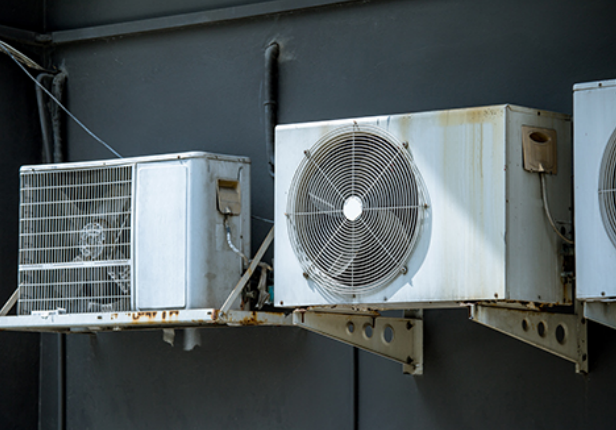
03 All-Weather Precision Monitoring Solution
To fundamentally solve the leakage monitoring challenges of new refrigerants such as R32 and R454B, MFrontier has launched the MGD11 series refrigerant leak monitoring sensor, a dedicated leak detection sensor based on NDIR (non-dispersive infrared) technology. The core of this solution lies in transforming "post-event remediation" into "pre-event warning."
NDIR technology identifies and quantifies gas concentration by detecting the characteristic absorption of specific wavelengths of infrared light by gas molecules. MFrontier's MGD11 series refrigerant leak sensors are precisely calibrated for the absorption spectra of specific refrigerants such as R32 and R454B, achieving highly selective monitoring. They are virtually unaffected by interference from other common gases (such as alcohol, cooking fumes, and VOCs), effectively eliminating false alarms.
The miniaturized sensor design allows for direct integration into air conditioning indoor units or installation at critical risk points in HVAC systems, such as compressor compartments, pipe joints, and near condensate pans. Its core advantage lies in its all-weather operation, capable of detecting leaks at extremely low concentrations (ppm level), far before the leak accumulates to dangerous levels.
Once an abnormal increase in concentration is detected, the sensor can immediately issue tiered alerts to users, property management, or building management platforms via local audio-visual signals, relay signals, or the Internet of Things (IoT). This enables a proactive safety management model of "detection and immediate response."
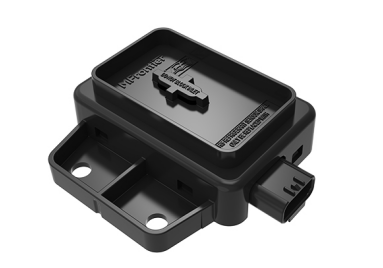
04 Dual Certifications, a Globally Recognized Safety Passport
In the safety-first HVAC-R industry, certification is a product's "international passport." The MGD11 series of miniature refrigerant sensors from MFrontier has achieved dual UL/IEC 60335-2-40 certifications, the best proof of its technological strength and reliability.
IEC 60335-2-40 is the International Electrotechnical Commission's safety standard for household and similar electrical appliances, specifically including special requirements for the use of flammable refrigerants. Passing this certification means that the MGD11 meets the highest international standards in safety design.
UL certification is a passport to the North American market, indicating that the product meets the stringent safety requirements of the United States and Canada. Obtaining dual certification allows the MGD11 to enter major global markets without barriers, providing strong compliance assurance for equipment manufacturers.
05 Full-Scenario Coverage from Home to Commercial
The value of the MGD11 lies in its transformation of discrete "leak detection" functions into a systematic "proactive safety" solution.
In residential split air conditioners, products integrating the MGD11 sensor can safeguard home safety in real time. It can provide early warnings when leaks are far below dangerous concentrations, notifying users via indicator lights or a connected app, thus preventing potential problems.
In complex commercial multi-split systems or rooftop units, multiple MGD11 sensors can form a monitoring network and integrate with building management systems. When a leak is detected, the system can not only accurately locate the fault area but also automatically execute preset safety procedures such as closing solenoid valves and activating emergency ventilation, transforming passive response into proactive defense and maximizing the safety of people and property.
06 Building a Future-Oriented Core Competitiveness
For equipment manufacturers, choosing the MGD11 series is far more than simply purchasing a sensor component. Its deeper value lies in building a future-oriented core competitiveness.
It transforms "compliance" from a mandatory cost item into a product differentiation selling point. Equipment equipped with dual-certified refrigerants like R454B that can accurately monitor new refrigerants conveys a safe, reliable brand image that meets the highest global standards.
It builds a preventative business model. By providing early warnings of leaks, it is possible to effectively reduce maintenance costs and downtime losses caused by major leaks, improve user satisfaction and brand loyalty, and even potentially spur new value-added services.
More importantly, the forward-looking nature of the MGD11 technology platform paves the way for next-generation products. Its stable and reliable long-term performance, customizable hardware interfaces and software protocols enable it to continuously adapt to new refrigerants and more stringent safety regulations that may emerge in the future.
Share