As smart automotive cockpit functions become increasingly sophisticated, virtually all high-level applications—ranging from thermal comfort management to safety monitoring—rely on a shared prerequisite: the precise sensing of the interior environment. However, traditional single-point temperature sensors provide readings only for specific locations, failing to capture the full picture of the temperature distribution within the cabin. Temperature disparities—whether between seats, between seat surfaces and the air, or between windows and the center console—can reach several degrees Celsius; yet, these very differentials serve as critical inputs for intelligent decision-making.
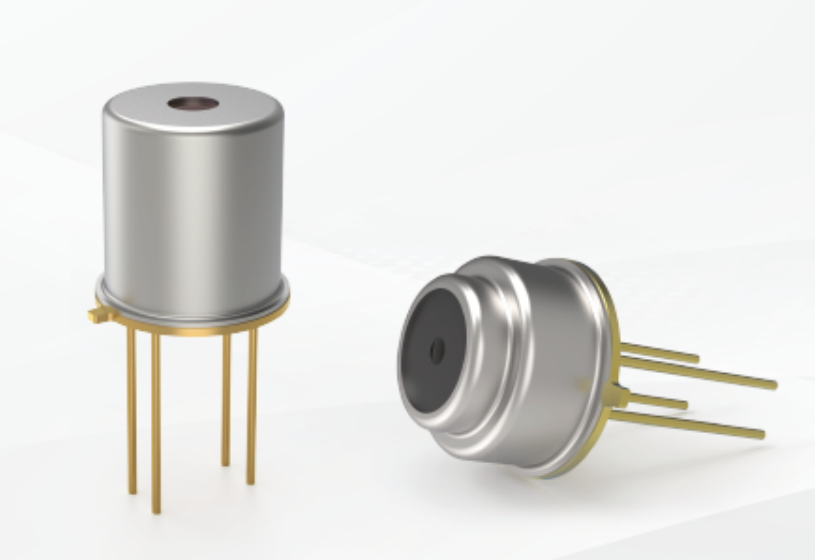
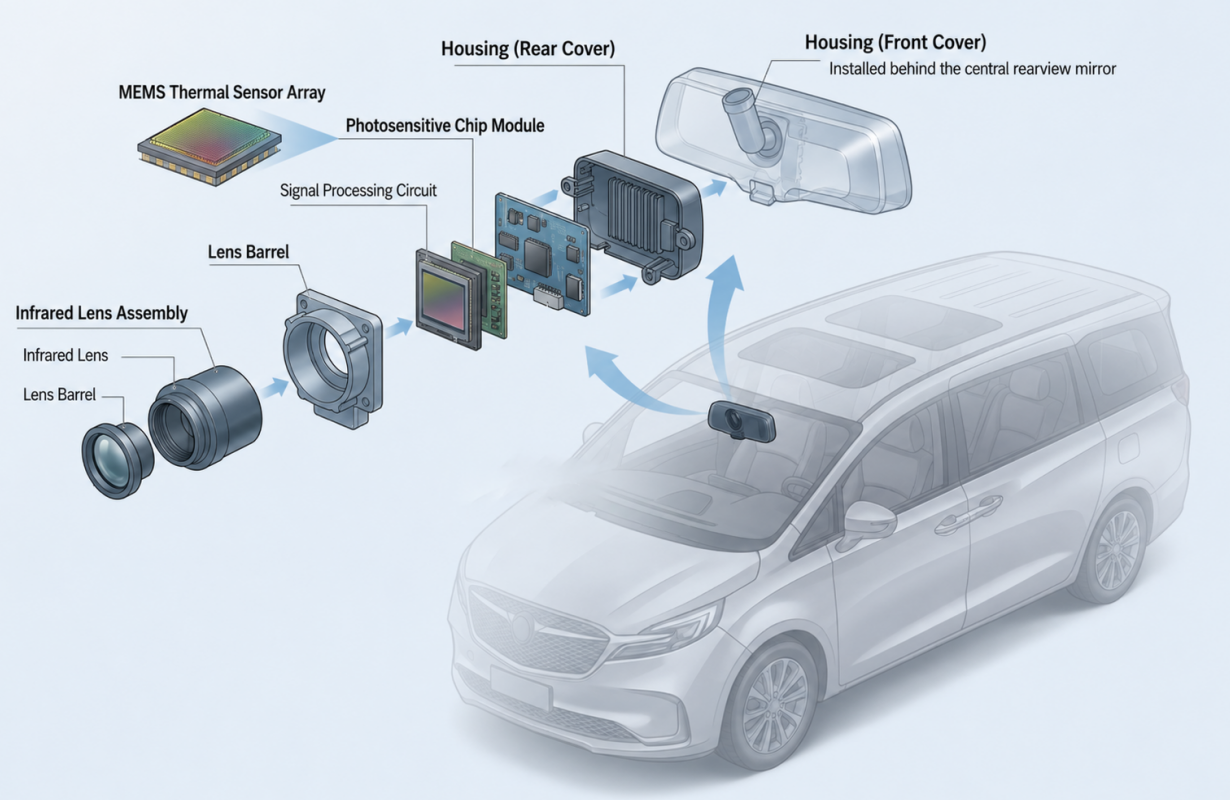
MFrontier's infrared thermopile array sensors provide the core capability for capturing comprehensive temperature field data within the automotive cockpit.
Real-time Full-field Temperature Mapping
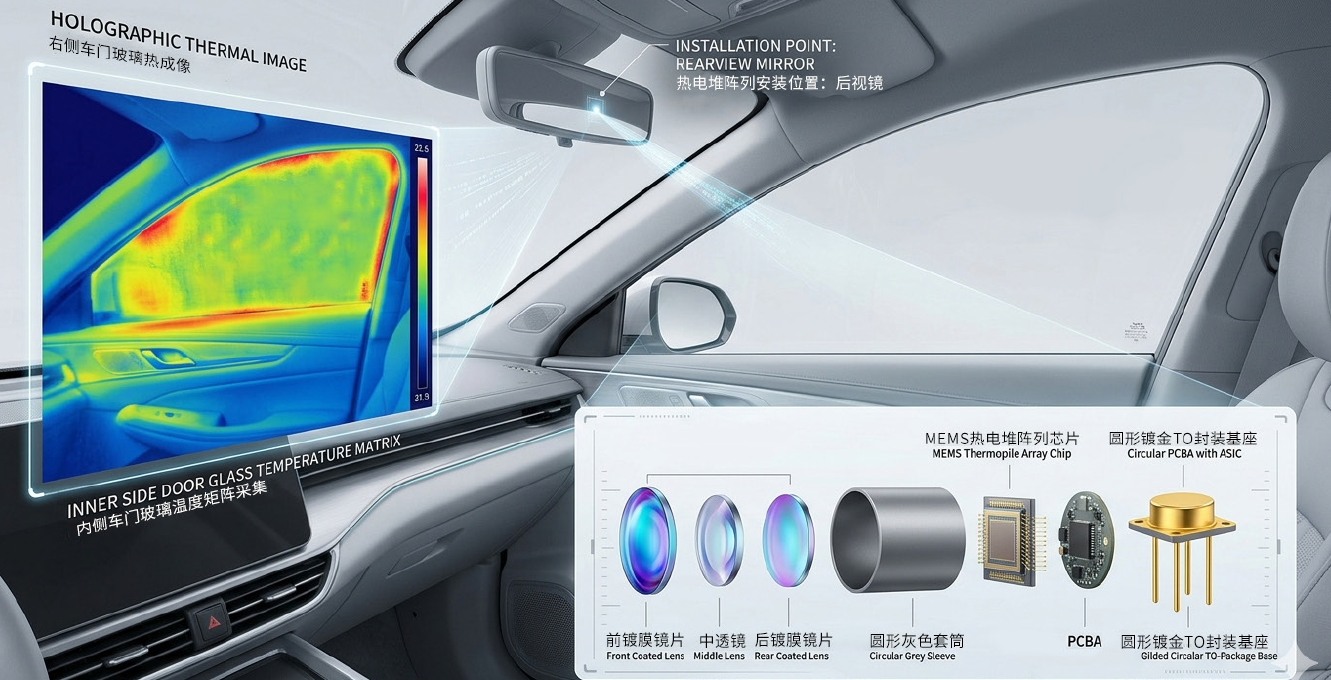
Leveraging infrared array sensor technology, MFrontier sensors capture temperature data from thousands of points within the cabin in real time, generating a comprehensive temperature distribution matrix. Everything from subtle temperature variations on seat surfaces and localized cold spots on windows to differences in thermal radiation across seating positions is precisely captured and digitized. This temperature field data serves not only for real-time monitoring but also as a repository of historical data, providing a rich foundation for subsequent algorithm optimization.
Algorithm-Driven: From Temperature to Semantics
While the temperature field itself constitutes "raw data," MFrontier integrates advanced image processing algorithms—such as YOLOv5 and Otsu—to transform this field into valuable semantic information:
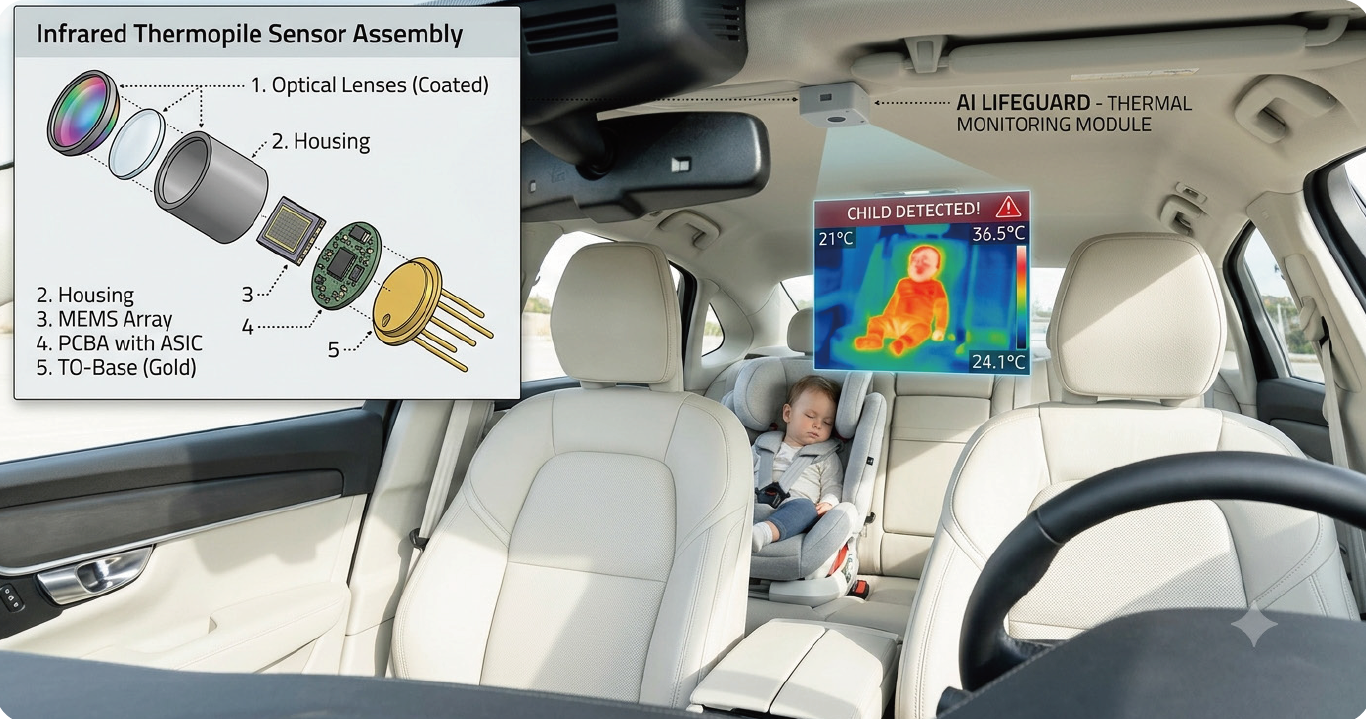
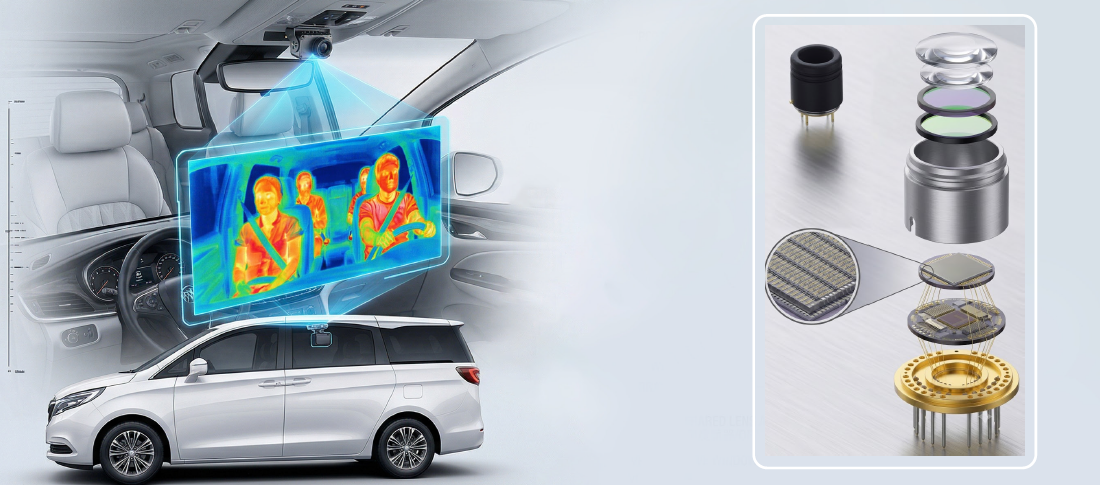
Occupant Spatial Tracking: Precisely locates each occupant's seat and orientation by identifying heat source contours.
Occupant Posture Recognition: Determines whether an occupant is sitting upright, leaning to the side, or lying down based on thermal imaging patterns.
Body Temperature and Clothing Analysis: Estimates body surface temperature and clothing insulation levels by analyzing the differential between body surface temperature and the ambient environment.
Providing Closed-Loop Data for Higher-Level Applications
Cabin temperature distribution data serves as the "foundational sensing layer" for intelligent cabin management. The resulting temperature matrices and occupant semantic data provide direct, closed-loop support for functions such as thermal comfort management, automatic climate control, and safety system decision-making, ensuring that every intelligent feature operates based on reliable, data-driven insights.
Share