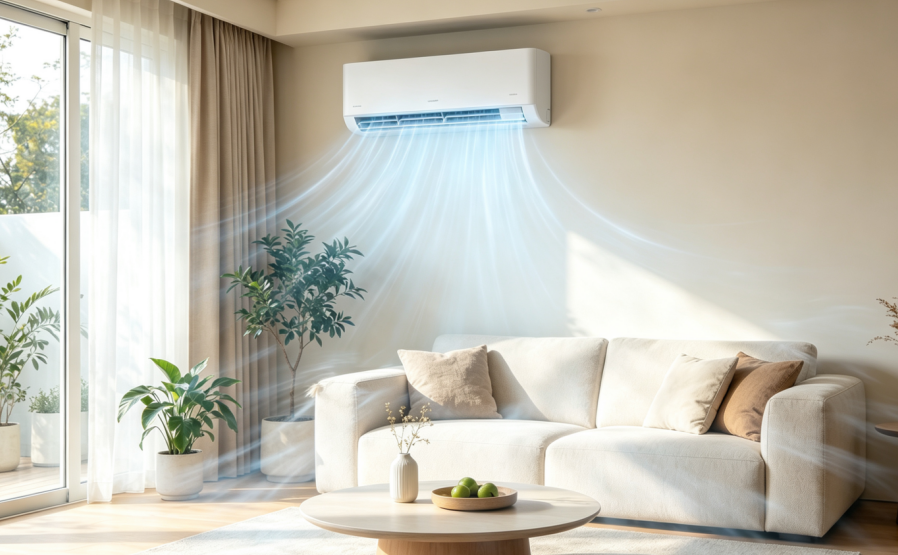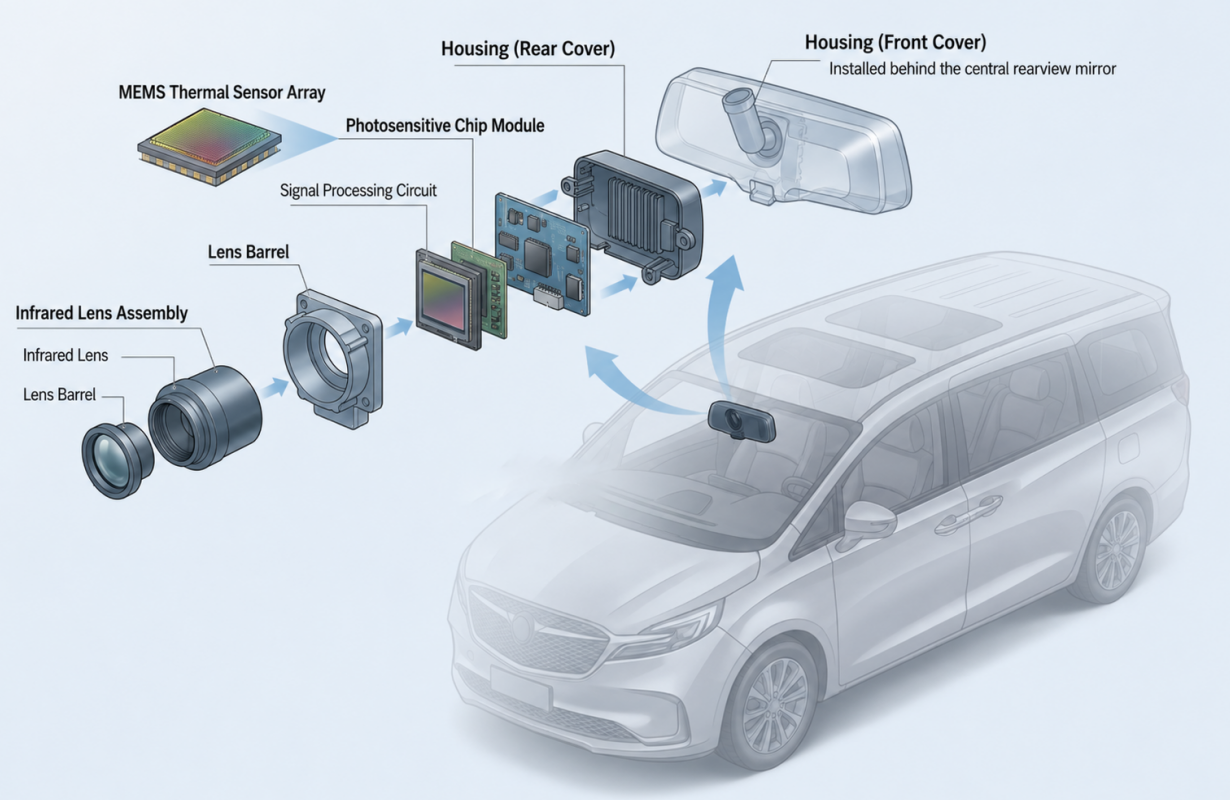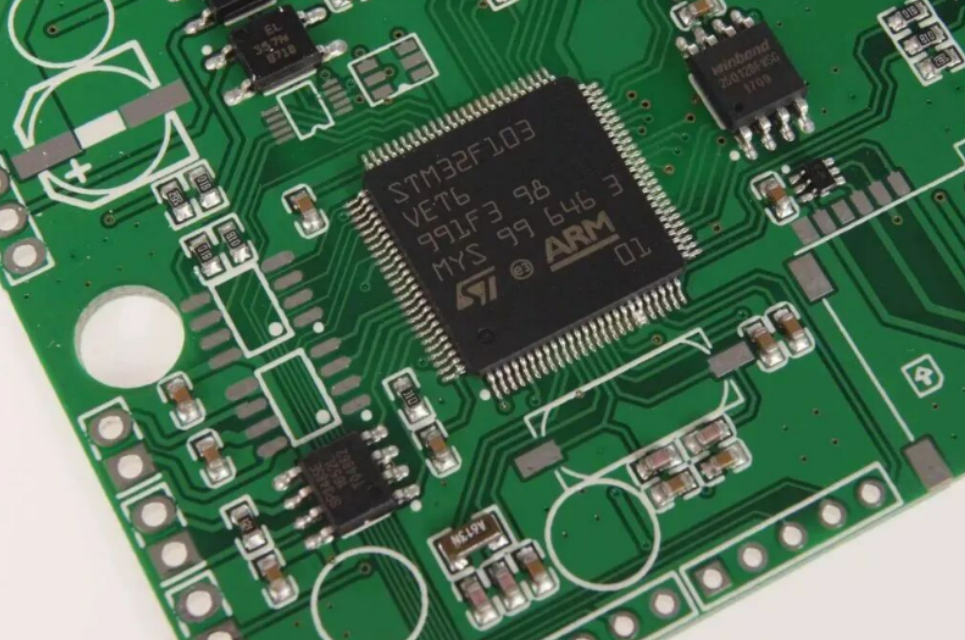
The temperature control logic of traditional automotive air conditioning is essentially a form of "open-loop control": the driver sets a target temperature, and the system delivers airflow based on a fixed algorithm. This approach suffers from a fundamental flaw—it neither detects the occupants' locations nor senses whether they feel hot or cold.
MFrontier has introduced infrared thermopile array sensors into cabin thermal management, upgrading the system from "passively executing settings" to "actively sensing thermal comfort" and truly achieving closed-loop control of occupant comfort.
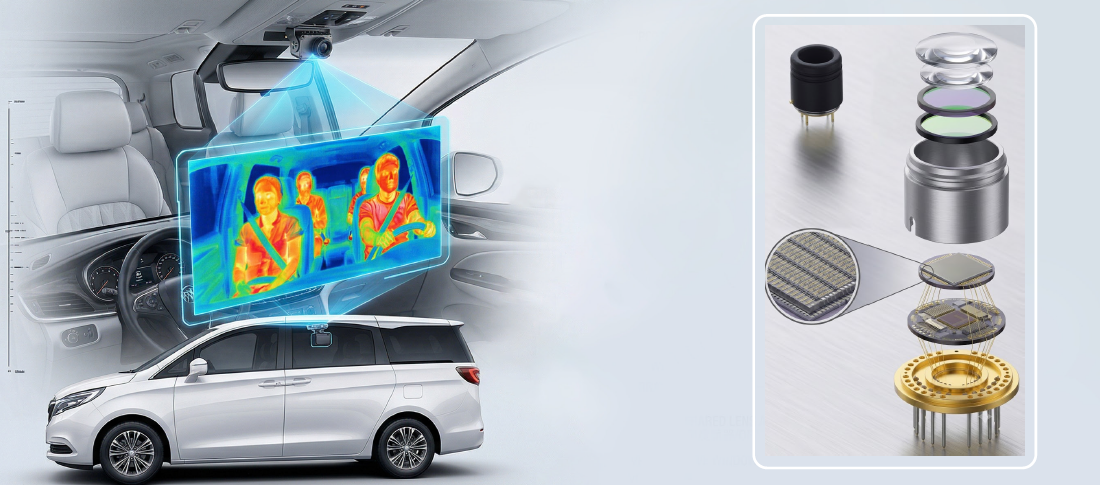
Multi-dimensional Perception: Understanding the True Needs of Occupants
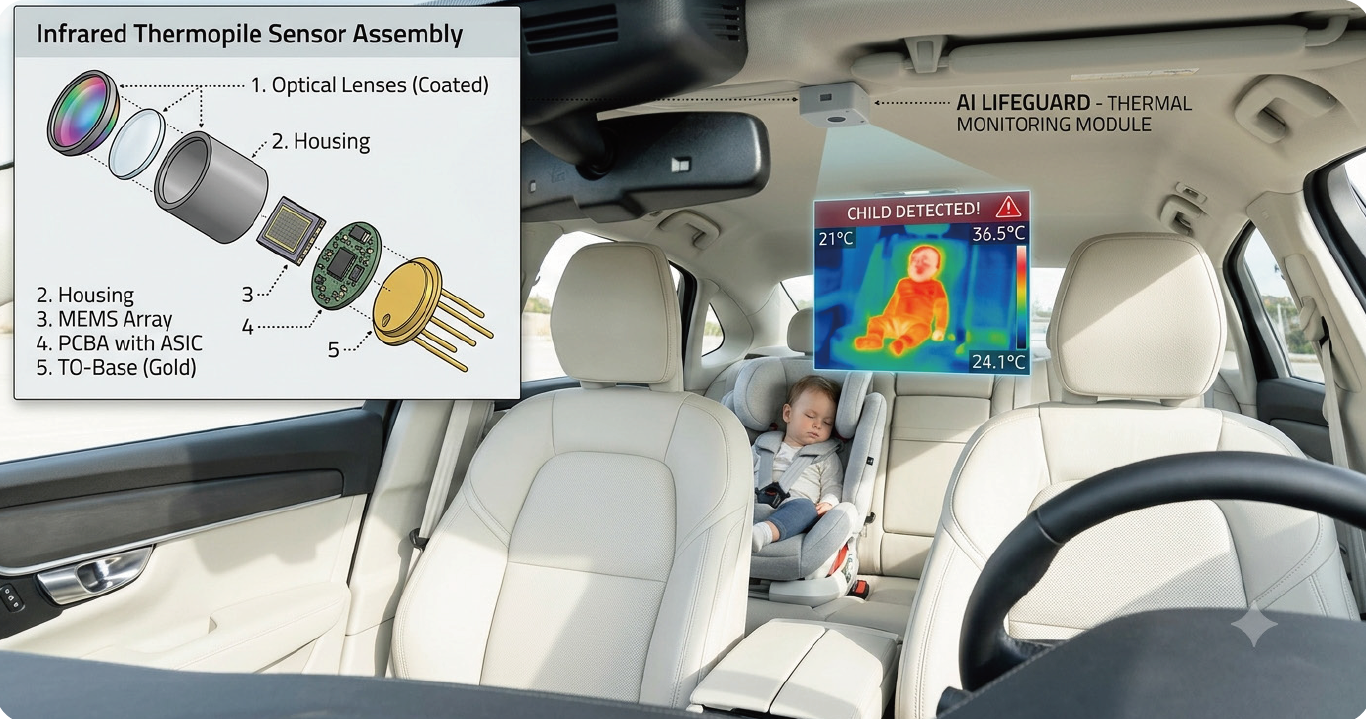
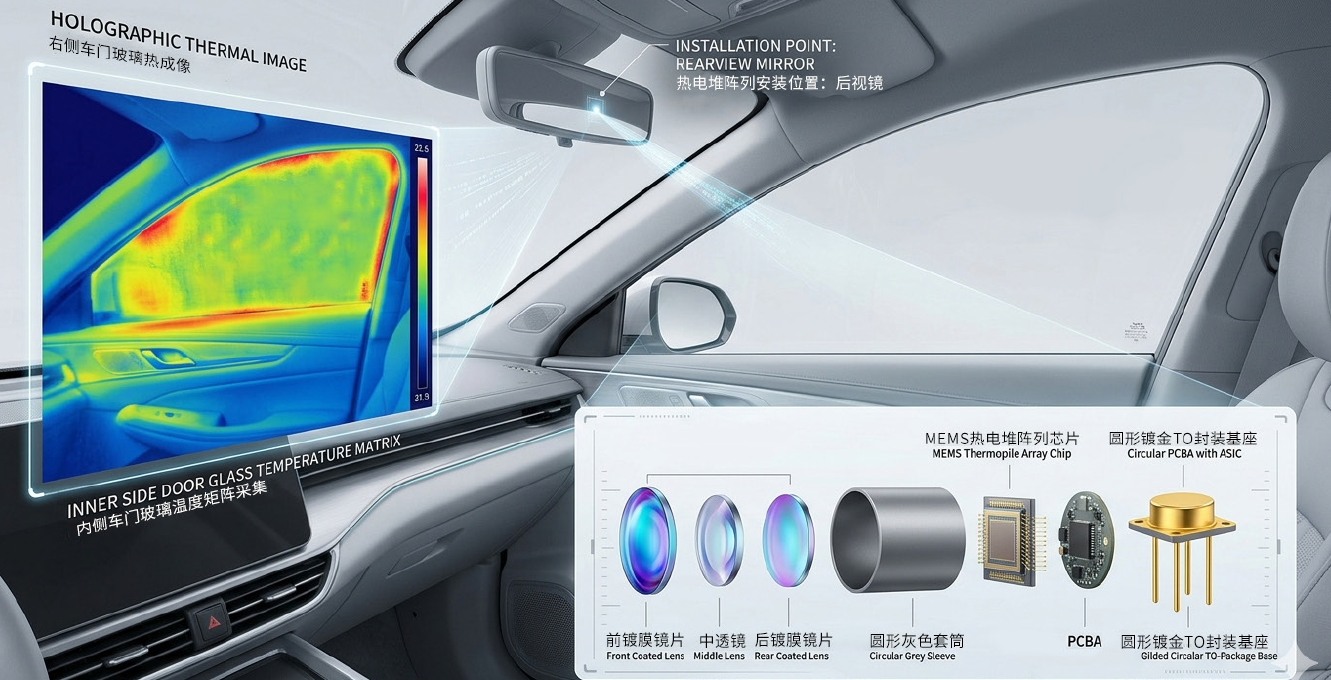
Equipped with an infrared thermopile array, the air conditioning system gains unprecedented sensing capabilities:
Personnel Distribution Perception: Real-time acquisition of whether each seat is occupied and the occupant's posture and orientation.
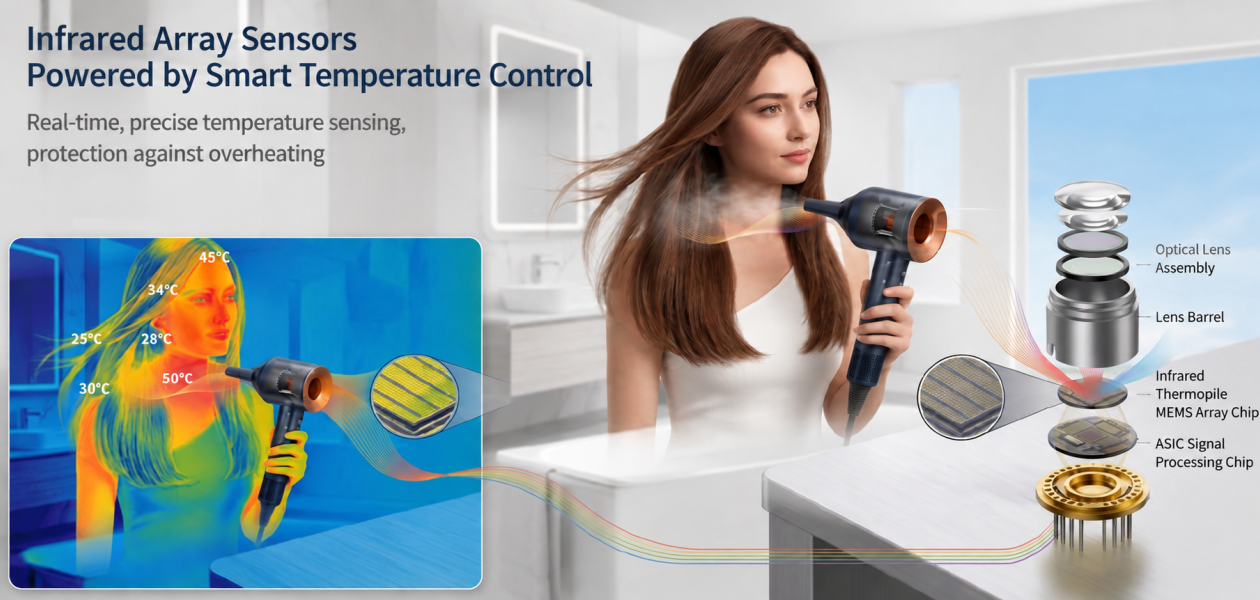
Body Surface Temperature Perception: Precisely captures body surface temperature to determine the occupant's current temperature status.
Clothing Information Perception: Identifies the thickness of occupant's clothing through thermal imaging to infer the comfortable temperature range.
Ambient Temperature Perception: Simultaneously collects ambient temperatures from seat surfaces, windows, etc., to assess the overall thermal environment of the cabin.
Four Intelligent Temperature Control Modes
Based on multi-dimensional perception data and a dedicated thermal comfort algorithm, the system implements four intelligent temperature control modes:
Following the Person: The air conditioning automatically focuses airflow on occupied seating areas, automatically shutting off or reducing airflow at vents for unoccupied seats, improving comfort while achieving energy conservation and emission reduction.
Avoiding People: The system accurately identifies the position of the human torso and automatically adjusts the airflow direction to prevent cold air from blowing directly on the occupant's body, completely eliminating the discomfort of "air conditioning sickness."
Gentle airflow near the occupant, comfortable airflow from a distance: The system dynamically adjusts the airflow speed based on the distance between the occupant and the air outlet—a gentle breeze when the occupant is close, avoiding strong winds; and a moderately stronger breeze when the occupant is further away, ensuring effective air delivery.
Adaptive seasonal adjustment: Combining clothing recognition, posture recognition, and a human thermal sensing model, the system autonomously determines the occupant's heating or cooling needs, infers the current season, and automatically switches between cooling, heating, or swing modes.
Share