Have you ever had this experience? Spending an afternoon in a closed office, even with the air conditioning at a comfortable temperature, you feel increasingly drowsy, your attention seemingly glued to the floor; students in classrooms daydream, meetings in meeting rooms are inefficient—everyone assumes it's due to "lack of oxygen," and that opening a window for ventilation will solve the problem—but actually, what truly makes us uncomfortable isn't insufficient oxygen, but rather the quietly rising carbon dioxide levels.
Today's buildings, in pursuit of energy conservation, are becoming increasingly airtight, but this has also made indoor air quality a hidden "invisible factor" all around us. We focus on visible and odorous pollutants like PM2.5 and formaldehyde, but overlook carbon dioxide, a more fundamental and sensitive "air health indicator."
I. The Invisible Health Indicator: Carbon Dioxide Concentration and Human Reactions
We often pay attention to pollutants like PM2.5 and formaldehyde, but easily overlook carbon dioxide, a fundamental yet crucial indicator.
The carbon dioxide concentration in fresh outdoor air is approximately 400 ppm (0.04%), a benchmark for judging whether indoor air is "fresh."
When indoor carbon dioxide levels exceed 1000 ppm, many people experience stuffiness, difficulty concentrating, and a significant decline in work efficiency and learning ability. At concentrations above 2000 ppm, headaches, drowsiness, and rapid heartbeat may occur, causing noticeable discomfort. Prolonged exposure to such an environment can also pose potential health risks. In contrast, in typical enclosed spaces, oxygen concentrations rarely drop to levels that affect human health (below 19.5%). Therefore, carbon dioxide is a more sensitive and important indoor air quality "warning signal" than oxygen.
II. Carbon Dioxide Accumulation in Enclosed Spaces Far Exceeds Expectations
The rate of CO₂ accumulation in enclosed spaces is far faster than imagined. Take a typical 15㎡ office as an example: with a ceiling height of 2.7 meters and an overall air volume of approximately 40 cubic meters, if two people work inside, each person will produce 15-20 liters of carbon dioxide per hour. In just one hour of enclosed space, the concentration can surge from an initial 500 ppm to over 1500 ppm, directly exceeding the threshold affecting cognitive function. At this point, relying on "opening the window only when you feel stuffy" is already too late.
Therefore, when people feel unwell, the root cause is usually excessive carbon dioxide accumulation, not oxygen deficiency. Real-time monitoring of carbon dioxide concentration has become the most economical and effective means to achieve precise ventilation and ensure health and comfort.
III. Technological Foundation: NDIR Sensors – The Guarantee of Precise Monitoring
Reliable carbon dioxide monitoring relies heavily on core sensing technology. Among various gas detection methods, non-dispersive infrared (NDIR) technology is widely recognized for its strong anti-interference capabilities and long-term stability:
High Precision and Anti-interference: NDIR technology utilizes the strong absorption of carbon dioxide molecules in a specific infrared band (4.26μm). This band is not easily interfered with by other common gases (such as formaldehyde and VOCs), accurately reflecting the true concentration of CO₂.
Long Lifespan and Stability: As an optical-physical detection method, NDIR sensors are not prone to aging and have low drift, providing reliable data over a long period.

In the field of environmental sensing, MFrontier has always focused on providing high-performance NDIR CO₂ sensor solutions. We integrate precision optical design, intelligent compensation algorithms, and robust construction to ensure that our sensors consistently output accurate data in various scenarios.
Now, these sensors are finding their way into many familiar scenarios:
In homes, fresh air systems, air conditioners, or air purifiers, when connected to sensors, can automatically adjust based on data – automatically exchanging air when it's not fresh enough, and reducing energy consumption when air quality meets standards, providing both comfort and energy savings;
In offices, classrooms, and meeting rooms, paired with environmental monitoring terminals, they display real-time CO₂ concentrations, providing scientific data on when and for how long ventilation is needed, eliminating guesswork.
In greenhouses and farms, sensors precisely control the gas environment, supporting crop growth and livestock health; in garages, factories, and other locations, they monitor ventilation to ensure safety.
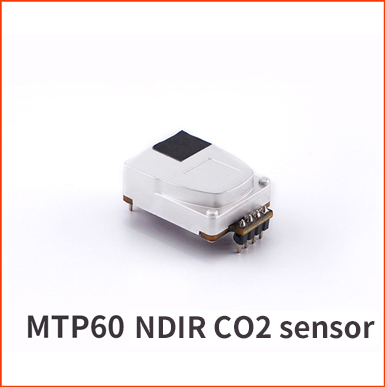
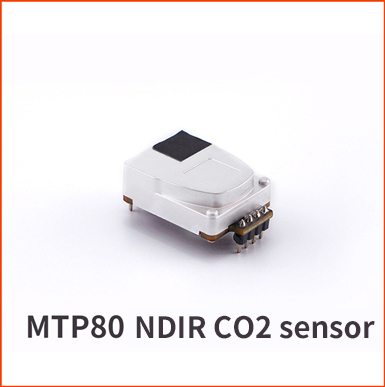
To meet different needs, MFrontier has launched two core products: the MTP60 series is a general-purpose and economical product that controls costs while ensuring core performance, making it particularly suitable for large-scale applications in consumer products; the MTP80 series adopts dual-channel dynamic compensation technology, which has stronger anti-interference capabilities against temperature and humidity and better long-term stability, and can easily cope with even harsh industrial and commercial environments.
Managing indoor air quality is no longer as simple as just "feeling stuffy." Accurate carbon dioxide monitoring is the key to effective indoor air management. MFrontier aims to transform this precise data into visible and usable intelligent controls, protecting the health and comfort of every breath and contributing to a smarter, greener living and working environment. After all, good air shouldn't rely on luck, but on cutting-edge technology.
Share