
In the intricate modern power grid, the stable operation of core equipment such as high-voltage switchgear (GIS) and circuit breakers relies on a medium known as the "golden gas"—sulfur hexafluoride (SF6). Due to its excellent insulation and arc-quenching properties, SF6 has become an indispensable cornerstone of the power industry. However, this "double-edged sword," if leaked, not only seriously threatens equipment safety and personnel health, but its global warming potential (GWP) is 23,900 times that of carbon dioxide, making it a highly concerning "climate bomb." Therefore, accurate, real-time, and reliable monitoring of SF6 gas is a lifeline for the safe operation and green development of the power industry. Against this backdrop, SF6 sensors based on non-dispersive infrared (NDIR) technology stand out with their superior performance, becoming a core sensing element in building a secure defense line for smart grids.
I. Technological Foundation: NDIR Principle and Performance Advantages
The working principle of NDIR sensors stems from the characteristic absorption of specific wavelengths of infrared light by gas molecules. SF6 molecules have a strong absorption peak in the infrared band around 10.6 micrometers. Inside the sensor, light emitted from the infrared light source passes through an optical gas chamber containing the sample gas. SF6 molecules absorb specific wavelengths of light energy, causing a decrease in the light intensity received by the detector. By precisely measuring this attenuation and combining it with advanced algorithms, the accurate concentration of SF6 gas can be calculated.
This principle gives NDIR sensors inherent advantages, making them stand out among numerous monitoring technologies and becoming the preferred choice for the power industry. They are extremely stable, with a lifespan of over ten years and virtually maintenance-free; they are highly selective, unaffected by moisture and dust in the environment, and only respond to SF6; and they are absolutely safe, not relying on any radioactive sources. In contrast, traditional electrochemical sensors are prone to "poisoning" and failure, while more precise laser methods are expensive and difficult to deploy on a large scale.
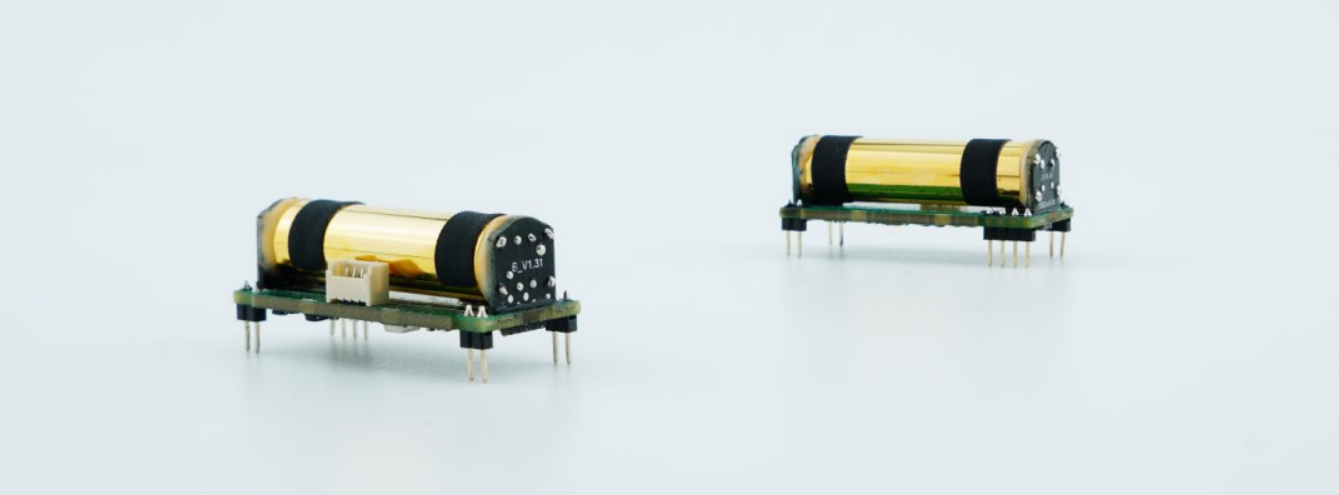
MFrontier NDIR SF6 Sensor
II. Application Overview: From Fixed Monitoring to Mobile Inspection – A Multi-Layered Protection System
NDIR SF6 sensors have been deeply integrated into all aspects of the power system, including generation, transmission, transformation, and distribution, forming a comprehensive, multi-layered protection system combining fixed online monitoring, portable inspection and localization, and support for special operations.
1. Fixed Online Monitoring System: The "Never-Sleeping Sentinel" of Substations
In enclosed or semi-enclosed spaces such as GIS rooms and circuit breaker compartments of substations, fixed NDIR monitoring systems constitute the first and most important line of defense. These systems typically employ wall-mounted or pipe-sampling designs to monitor the concentration of SF6 in the ambient air in real time. Once the concentration exceeds the safety threshold (usually set at 1000 ppm), the system immediately activates audible and visual alarms and can automatically interlock with fans for forced ventilation to prevent gas accumulation that could lead to oxygen deficiency (alarm triggered when O₂ concentration is below 18%) or explosion risks. Through integration with the substation's SCADA (Supervisory Control and Data Acquisition) system or IoT cloud platform, maintenance personnel can achieve centralized monitoring and intelligent early warning of SF6 environmental risks across the entire network from a remote center.
2. Portable Leak Detectors: The "Precise Locator" for Maintenance Personnel
Although fixed systems provide comprehensive monitoring, precise localization of leak points still relies on portable NDIR leak detectors held by maintenance personnel. These devices are lightweight and portable (weighing as little as approximately 280 grams), with fast response times (T90 can be less than 15 seconds), enabling close-range scanning inspections of potential leak points such as flanges, welds, valves, and bushings of GIS equipment. Their sensitivity is sufficient to detect trace leaks with an annual leakage rate of less than 0.1%, improving the efficiency of daily inspections, post-maintenance sealing acceptance, and rapid localization of sudden leaks by more than 90%, eliminating potential hazards in their infancy.
3. Special Applications and High-End Equipment: Protecting Core Assets and Major Projects
In high-end fields such as ultra-high voltage and nuclear power, higher demands are placed on the reliability, electromagnetic interference resistance, and extreme environment adaptability of monitoring technologies. A mobile sulfur hexafluoride (SF6) gas service workstation integrated with high-precision NDIR sensors is like an "aircraft carrier" deployed to emergency repair sites, capable of reducing the fault repair time of ultra-high voltage lines from 2-3 days to less than 1 day, significantly improving the power grid's emergency response capabilities.
III. Value Enhancement: From Safety Guardian to "Dual Carbon" Pioneer
The value brought by NDIR sensors extends far beyond accident prevention. Firstly, it brings significant economic benefits. Early and accurate detection of leaks avoids catastrophic losses such as equipment failures and large-scale power outages caused by insulation failure, and also reduces the blind replenishment and unnecessary waste of expensive SF6 gas (a single ultra-high voltage GIS requires hundreds of kilograms).
A deeper value lies in its support for the national "dual carbon" strategy. According to the national greenhouse gas emission accounting guidelines, power companies must account for and report their SF6 leakage and emissions. The nationwide network of NDIR sensors forms the nerve endings for SF6 emission data collection. Leading companies in the industry are advancing the "Ten Thousand Cabin Internet of Things" project, aiming to establish a full life cycle electronic identity and carbon footprint tracking for every bottle of SF6 gas by deploying thousands of distributed management cabins and monitoring points, combined with sensor data. This provides a real and credible data foundation for the power industry to participate in carbon trading, transforming monitoring technology from a passive safety tool into an active tool for carbon asset management and emission reduction and efficiency improvement.
IV. Future Outlook: Towards a Smarter and More Integrated Sensing Network
With the deepening of the construction of new power systems and smart grids, NDIR SF6 sensing technology is evolving towards a more intelligent, integrated, and networked direction:
Multi-sensor fusion and AI empowerment: Future monitoring terminals will not only be single SF6 sensors, but integrated nodes with multi-dimensional sensing elements such as O₂, temperature, humidity, and pressure. Combined with artificial intelligence algorithms, the system can analyze the gradient and pattern of concentration changes, intelligently distinguish between normal equipment gas release and abnormal sudden leaks, achieving a leap from "exceeding the standard alarm" to "trend warning" and "predictive maintenance." Digital Twin and Visualized Operation and Maintenance: Monitoring data will be linked in real-time with the 3D digital twin model of the substation. In the event of a leak, operation and maintenance personnel can visually see the gas diffusion simulation and precisely locate the leak point in the virtual space, greatly improving emergency command and decision-making efficiency.
Compatibility with New Environmentally Friendly Gases: To address the global trend of restricting the use of SF6, the NDIR technology platform is actively expanding its detection capabilities for environmentally friendly alternative insulating gases such as CF3I and C4F7N, providing technical reserves for the green transformation of the power industry.
Conclusion
From the silent wall-mounted probes in the GIS room to the precise leak detectors in the hands of maintenance personnel, the NDIR sulfur hexafluoride sensor, with its robust technical core, silently guards every heartbeat of the power grid. It is not only a "loyal guardian" preventing gas leaks and ensuring the safety of personnel and equipment, but also an "environmental pioneer" for the power industry in addressing climate change and practicing green and low-carbon development. In today's era of deep integration of the energy revolution and the digital revolution, this increasingly intelligent "sensing heart" will continue to evolve, contributing indispensable fundamental strength to building a safer, more reliable, and greener modern energy system.
Share