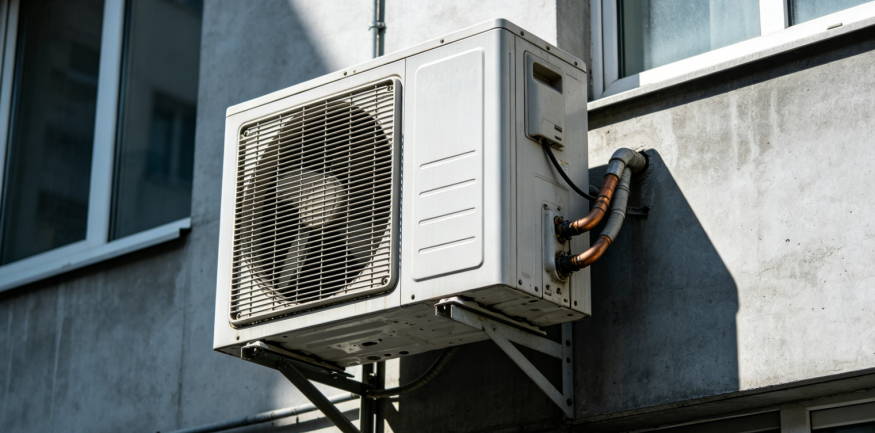
Invisible refrigerant leaks are becoming one of the most difficult safety hazards to prevent in the HVAC and refrigeration industry. With the accelerated adoption of low GWP (Global Warming Potential) refrigerants such as R32, R454B, and R290, their flammable and explosive properties place unprecedented demands on leak monitoring. Traditional detection methods are either outdated or prone to false alarms, making them insufficient to meet the dual challenges of regulations and safety. MFrontier's MGD11 series of miniature refrigerant leak monitoring sensors, based on non-dispersive infrared (NDIR) technology, brings a new high-precision, highly reliable, and interference-resistant safety monitoring solution to the industry.
I. The Safety Dilemma of New Generation Refrigerants
Tighter environmental regulations are gradually phasing out high GWP refrigerants, but the application of R290 (A3 class, flammable and explosive) and R32 (A2L class, slightly flammable) also brings new risks. Once leaked in a confined space and accumulated to the lower explosive limit (e.g., 2.1% for R290), any electrical spark could trigger a serious accident.
Meanwhile, global regulatory thresholds are rapidly increasing: starting in 2026, the US EPA will lower the regulatory threshold for high-GWP refrigerant systems from 50 pounds to 15 pounds; the EU F-Gas requires an 80% reduction in high-GWP refrigerants by 2030; and China has also incorporated HFCs into its unified regulations. Safety compliance has become a prerequisite for equipment to enter the mainstream market.
II. Three Major Drawbacks of Traditional Detection Methods
Household air conditioners have almost no active monitoring, and users only notice leaks when the equipment stops cooling. Commercial systems rely on manual inspections, which are inefficient and cannot provide 24/7 coverage and traditional semiconductor sensors are highly susceptible to interference from alcohol, cooking fumes, and VOCs, leading to frequent false alarms and a lack of trust. The industry urgently needs a truly accurate, reliable, and continuously operating monitoring method.
III. MGD11: NDIR Technology, Precise Anti-Interference
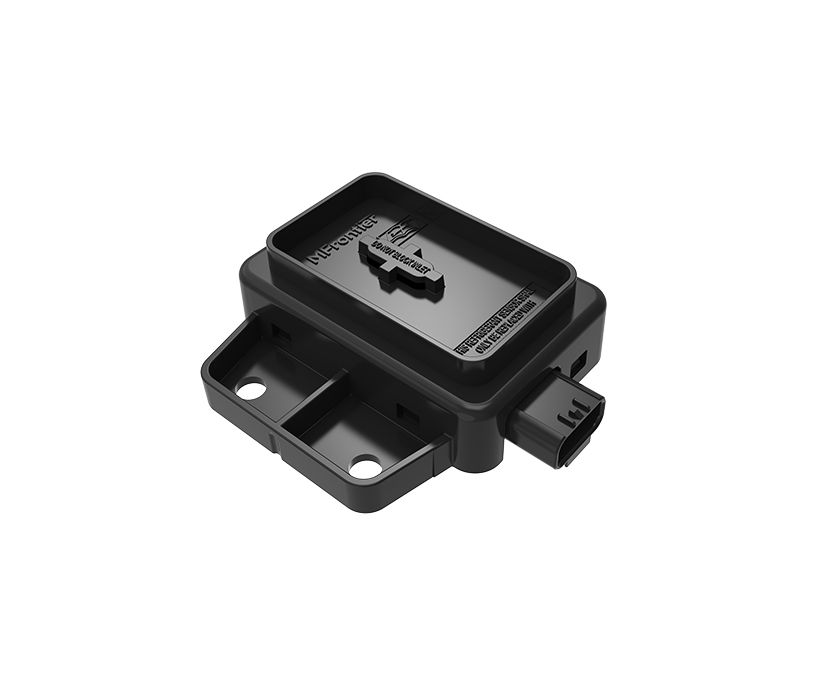
The MGD11 series employs infrared absorption principles, precisely calibrated for the absorption spectra of specific refrigerants such as R32, R454B, and R290, achieving highly selective monitoring. It is virtually unaffected by common gases like alcohol, cooking fumes, and VOCs, completely eliminating false alarms. Built-in temperature compensation and self-calibration functions enable continuous detection of minute leaks at the ppm level, far exceeding dangerous concentrations, giving users valuable response time.
IV. Core Parameters, Reliable and Easily Integratable
- Wide Temperature Range: -40℃~85℃, adaptable to extremely cold and high temperature environments
- Low Power Consumption: Average ≤88mA, Peak ≤95mA, Wide Power Supply Range 3.8~5.5V
- Fast Response: T90≤20 seconds, preheating to operation requires only about 5 seconds
- Monitoring Range: 0~25% LFL, Accuracy ±2.5% LFL, Alarm Threshold Preset 10.0% LFL
- Long-Term Reliability: MTBF≥10 years, IP54 protection rating, certified by both IEC/UL 60335-2-40 safety standards
- Compact and Easy to Install: Dimensions are only 52.38×63.44×18.3mm, allowing for flexible integration into critical locations such as air conditioner indoor and outdoor units, compressor compartments, and pipe joints.
V. From Sensors to a Safe Ecosystem
The MGD11 uses RS485@Modbus-RTU output, enabling it to link with fans and control systems to form a closed-loop safety mechanism of "detection → alarm → coordinated response." MFrontier possesses a complete industrial chain encompassing chip design, wafer manufacturing, and packaging testing, providing full technical support and customized services, continuously empowering the intelligent upgrade of the HVACR industry.
Conclusion
In today's rapidly growing global adoption of low-GWP refrigerants, choosing a high-precision, highly reliable, and interference-resistant refrigerant leak monitoring sensor is not only crucial for equipment energy efficiency and compliance, but also for the safety of users' property and lives. The MGD11 series, with its NDIR technology, dual international safety certifications, and miniaturized, flexible integration design, is building a solid safety barrier for the global HVACR industry.
Proactive monitoring is the only correct choice.
Share