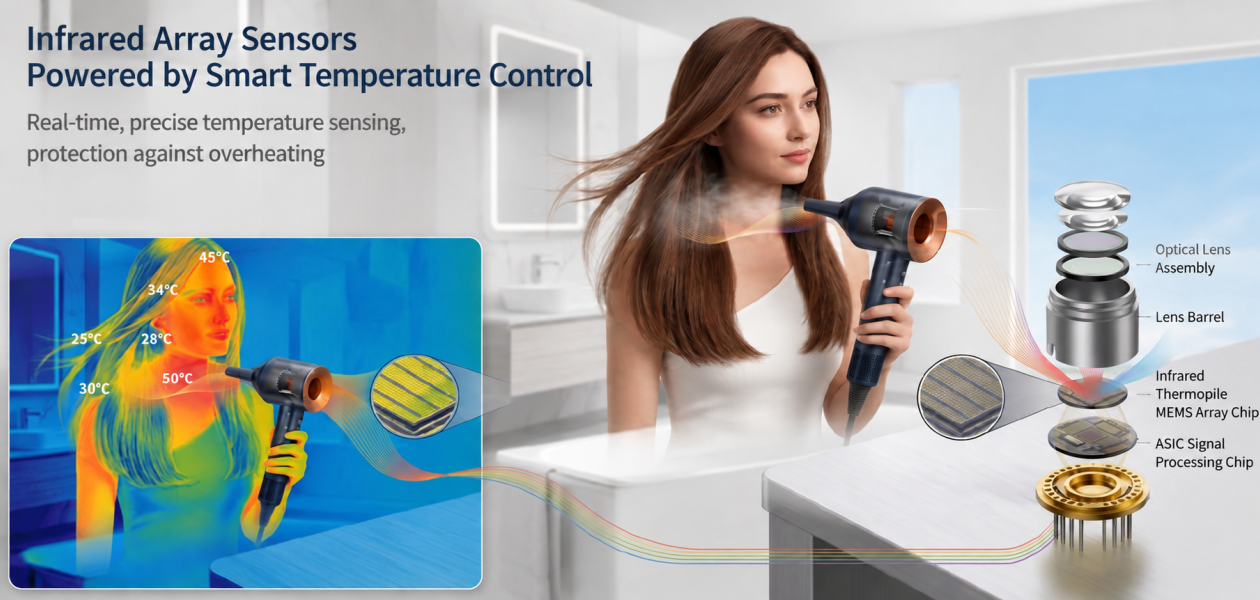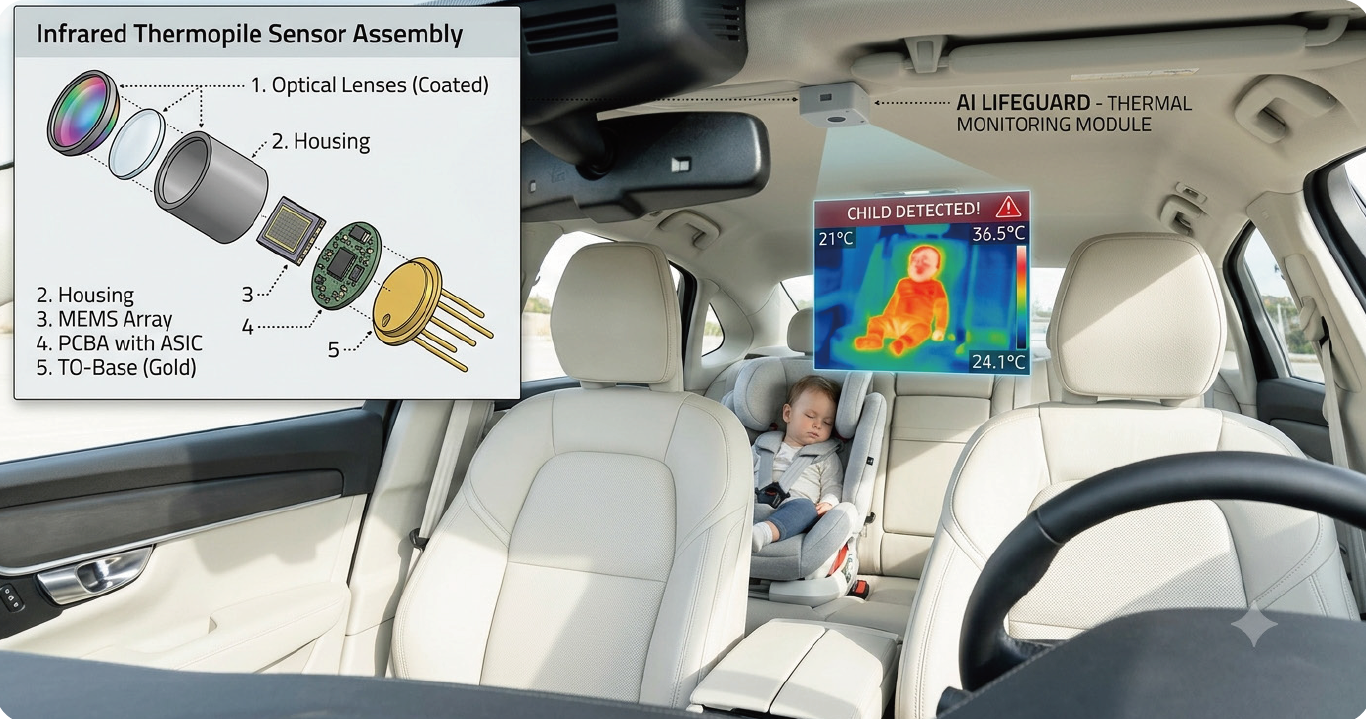
In the field of ambient temperature measurement using integrated MEMS chips, three mainstream technologies prevail: thermal resistors, thermopiles, and PN junctions. Thermal resistance-based measurement utilizes thermistors—such as platinum metals or doped silicon—that exhibit a constant temperature coefficient of resistance; specifically, their electrical resistance varies linearly with temperature. Since changes in resistance correspond directly to absolute temperature, this method requires a constant current source for operation. Thermopiles are based on the Seebeck effect, employing multiple thermocouples connected in series to convert temperature differentials into voltage signals; to derive the target temperature, the temperature of the cold junction must be measured independently. In MEMS implementations, thermopiles typically consist of polysilicon/aluminum thermocouples stacked upon a suspended silicon nitride membrane, wherein the hot junctions absorb infrared radiation while the cold junctions are anchored to the substrate. PN junction-based thermometry leverages the property of semiconductor PN junctions wherein, under a constant forward current, the voltage drop across the junction is inversely proportional to absolute temperature (approximately -2 mV/°C); the resulting voltage or digital output corresponds directly to the absolute temperature, thereby eliminating the need for an external reference.
Features | Platinum Resistance Thermometer | Thermopile | PN Junction |
Measurement Type | Contact-type | Non-contact (Infrared Radiation) | Contact-based |
Accuracy | ±0.1–0.5°C (High Linearity) | ±0.5°C (Requires Cold-Junction Compensation) | +0.5°C (Excellent Linearity) |
Temperature Range | -200–800°C (Wide Range) | -40 to 100°C (Limited Range) | -55 to 150°C (CMOS) |
Response Speed | 10–100 ms (High Thermal Capacity) | 20–50 ms (Dependent on Membrane Thermal Inertia) | <1 ms (Fast Junction Temperature Response) |
Power Consumption | Medium-to-High (Requires Excitation Current) | Low (Passive Operation) | Extremely Low (0.2 µA Standby) |
Compensation Requirements | Requires Linearization Circuit | Highly Dependent on Cold-Junction Compensation | Built-in Compensation (Digital Output) |
Integration Difficulty | Medium (Complex Thin-Film Process) | High (Suspended Structure is Fragile) | Low (CMOS Process Compatible) |
Cost | High (Platinum Material + Calibration) | Moderate (Benefits from MEMS Batch Processing) | Low (Standard Semiconductor Process) |
For high-precision industrial monitoring, platinum resistance thermometry is the preferred choice. Its advantages include a wide temperature range (-200 to 800°C) and excellent long-term stability; however, it requires careful consideration in scenarios sensitive to power consumption and cost, and one must account for potential errors caused by the self-heating effect. This method is well-suited for monitoring power equipment or high-temperature reaction vessels—for instance, the internal temperature of chemical reactors typically ranges from -50 to 500°C and requires precise control (e.g., polymerization reactions often demand an error margin within ±0.5°C). In such cases, the PT100 resistance thermometer is the ideal choice, as its measurement range spans -200 to 850°C, it achieves Class A accuracy (0.15°C + 0.002|t|), and—when properly packaged—it offers resistance to vibration and corrosion, ensuring stable, long-term operation.
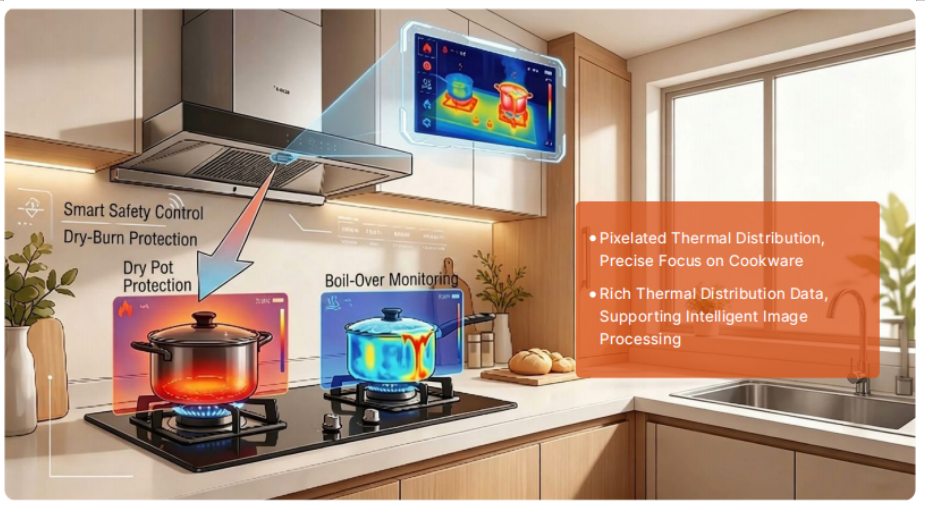
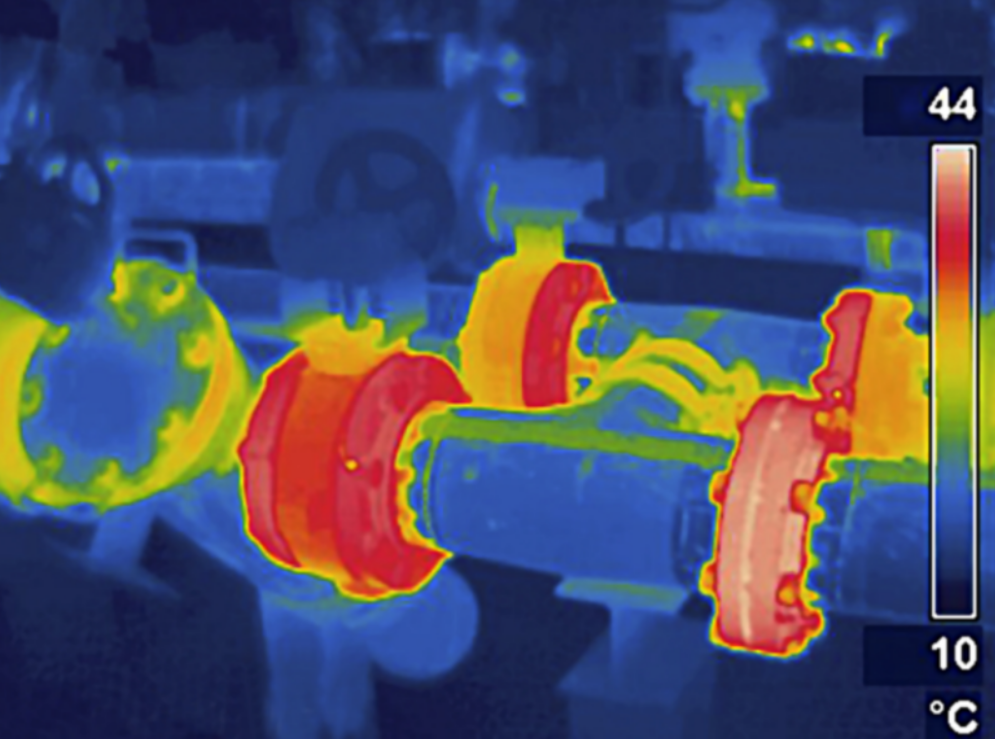
For non-contact temperature measurement, a thermopile-based solution is recommended. Its primary advantage is the elimination of the need for physical contact; however, it necessitates an integrated cold-junction compensation scheme to ensure real-time accuracy. This technology is applicable to medical forehead thermometers and anti-scald safety features in home appliances (such as electric ceramic stoves). A prime example is surface temperature monitoring for high-voltage motors: while operating, these motors are electrically live and cannot be physically touched, yet they require real-time monitoring to detect overheating (typically within the 50 to 150°C range). Thermopile sensors can be mounted at a distance of 10 to 30 cm from the motor to rapidly capture surface temperatures via infrared radiation, thereby eliminating the risk of electric shock.
For embedded systems where energy efficiency is a priority, PN-junction temperature sensing is the preferred method. Its key advantages are ultra-low power consumption and the availability of digital interfaces (such as I²C or 1-Wire); however, it is not suitable for high-temperature environments. A common application is CPU temperature monitoring: computer CPUs typically operate within a temperature range of 40 to 100°C and require real-time temperature feedback to dynamically adjust fan speeds. The PN-junction sensors embedded within the CPU are microscopic in size (at the micron scale), allowing them to be integrated directly onto the core silicon die; they respond to temperature fluctuations within 0.01 seconds and incur virtually no additional cost, as they are built directly into the chip itself. Another critical application is internal temperature monitoring in lithium-ion batteries; during charging and discharging cycles, the internal temperature must be maintained between -20 and 60°C to prevent overheating and the risk of fire. PN-junction sensors can be embedded directly into the battery cells—their minuscule size ensures they do not compromise the battery's structural integrity—and their high sensitivity allows them to detect even minute temperature fluctuations (such as a 0.5°C shift during charging or discharging), enabling the Battery Management System (BMS) to trigger timely power cutoff and protection measures.
Share