Automotive exhaust systems primarily incorporate oxygen sensors, NOx sensors, exhaust temperature sensors, differential pressure sensors, and PM sensors; among these, which sensors are suitable for implementation using MEMS technology?
Oxygen sensors operate based on either the Nernst principle or the characteristic properties of semiconductor materials. By detecting variations in the oxygen content of the exhaust gas, they determine the combustion status of the engine. They are broadly categorized into zirconia-type and titania-type oxygen sensors. In both cases, the sensing elements consist of macroscopic ceramic materials, consequently, current iterations of these sensors are non-MEMS devices.
The operating principle of exhaust system NOx sensors is primarily rooted in electrochemistry, the most common variant is the planar ceramic-type NOx sensor—another non-MEMS device. Exhaust temperature sensors function primarily by leveraging the thermistor effect, the most widely utilized component for this purpose is the Negative Temperature Coefficient (NTC) thermistor, which is likewise a non-MEMS device.
A common type of PM sensor is the resistive particulate matter sensor. This device operates on the principle that the deposition of particulate matter onto the sensor's electrodes induces a measurable change in electrical resistance. Typically, it consists of two parallel electrodes mounted on an insulating substrate; since these electrodes are directly exposed to the flow of exhaust gas, this sensor configuration also falls into the category of non-MEMS devices.
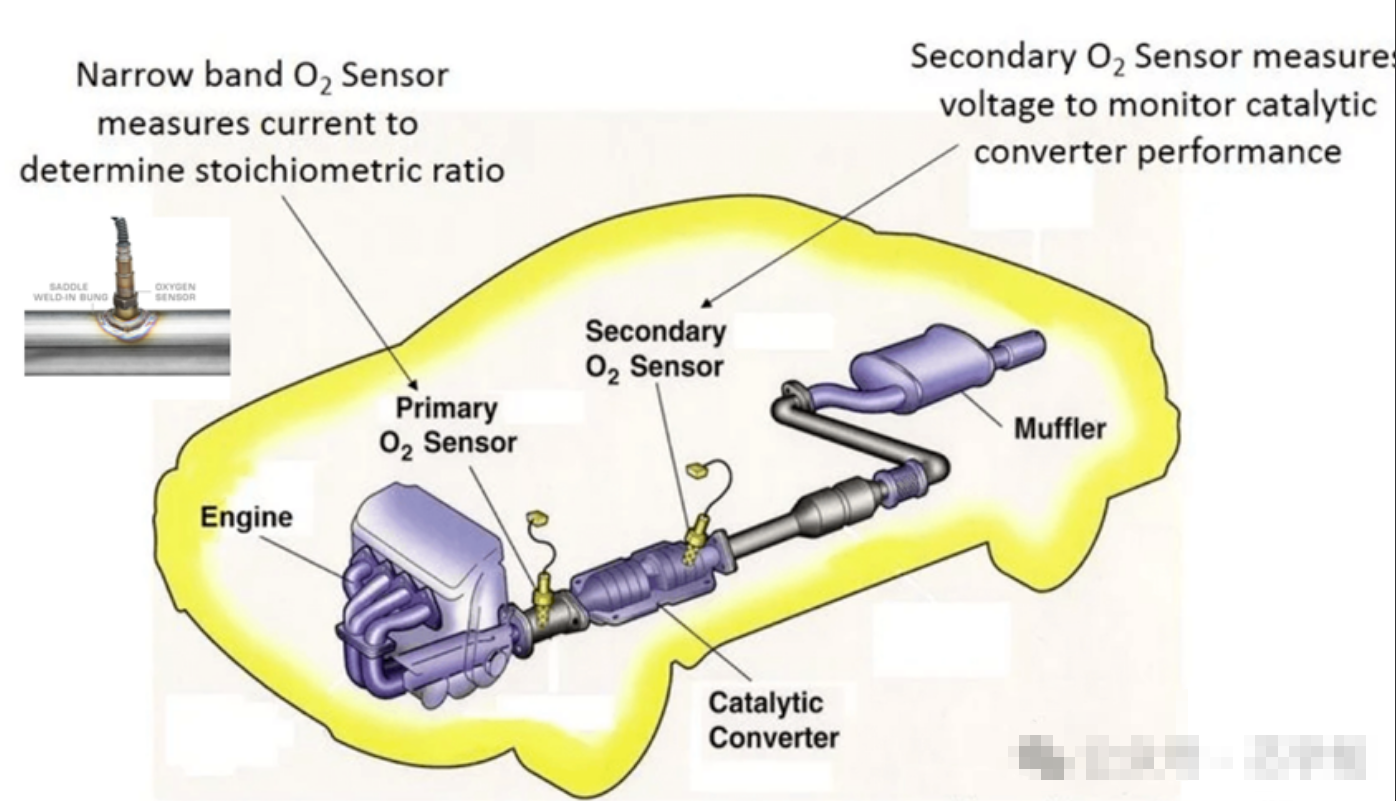
Figure: Oxygen Sensor in the Exhaust Pipe of a Fuel-Powered Vehicle
The fundamental operating principle of a differential pressure sensor is based on the effect of pressure upon a sensitive element, thereby converting a pressure differential into an electrical output signal. Piezoresistive differential pressure sensors are a type of MEMS sensor, their core sensitive element is a piezoresistive MEMS chip, typically fabricated on a silicon substrate using processes such as diffusion or ion implantation to form pressure-sensitive resistors.
For GPF (Gasoline Particulate Filter) applications, the measurement range of the differential pressure sensor is typically determined by the specific design of the GPF and its intended operating environment. Generally, these ranges fall within the following parameters: for small gasoline engines, the sensor range may lie between 0 and 5 kPa. For medium-sized gasoline engines, the GPF differential pressure sensor range is typically around 0 to 10 kPa. For high-performance gasoline engines—which generate higher exhaust flow rates and where the GPF may consequently produce larger pressure differentials during operation—the sensor range may need to extend to 0–20 kPa or even higher.
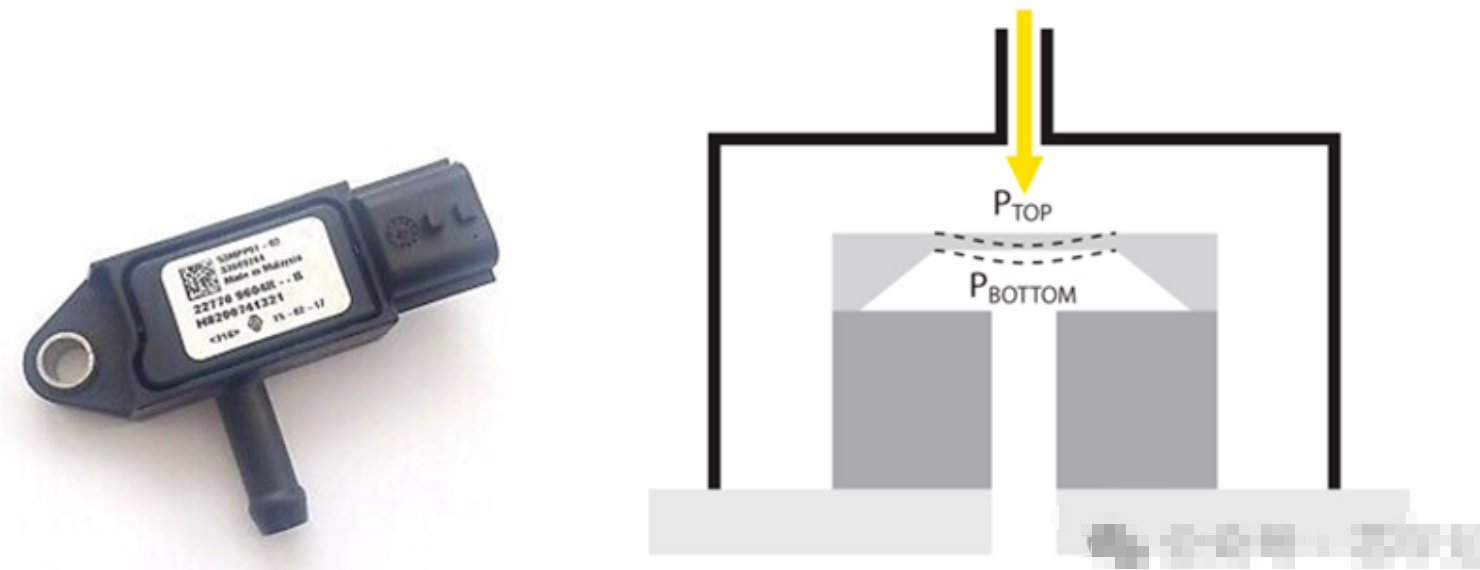
Figure: Differential Pressure Sensor in the Exhaust Pipe of a Fuel-Powered Vehicle
Leveraging advantages such as miniaturization, low cost, and low power consumption, MEMS sensors are finding increasingly widespread application within automotive exhaust systems. Exhaust temperature can be measured using MEMS thermocouples or resistive thermal sensors, while carbon monoxide, carbon dioxide, and hydrocarbons can be detected via NDIR sensors. These NDIR devices determine gas concentrations based on the absorption characteristics of gases at specific infrared wavelengths, playing a pivotal role in exhaust system applications. To monitor exhaust parameters with greater precision and meet increasingly stringent emission regulations, the deployment of MEMS sensors within exhaust systems is continuously enhancing both the accuracy and reliability of measurements.
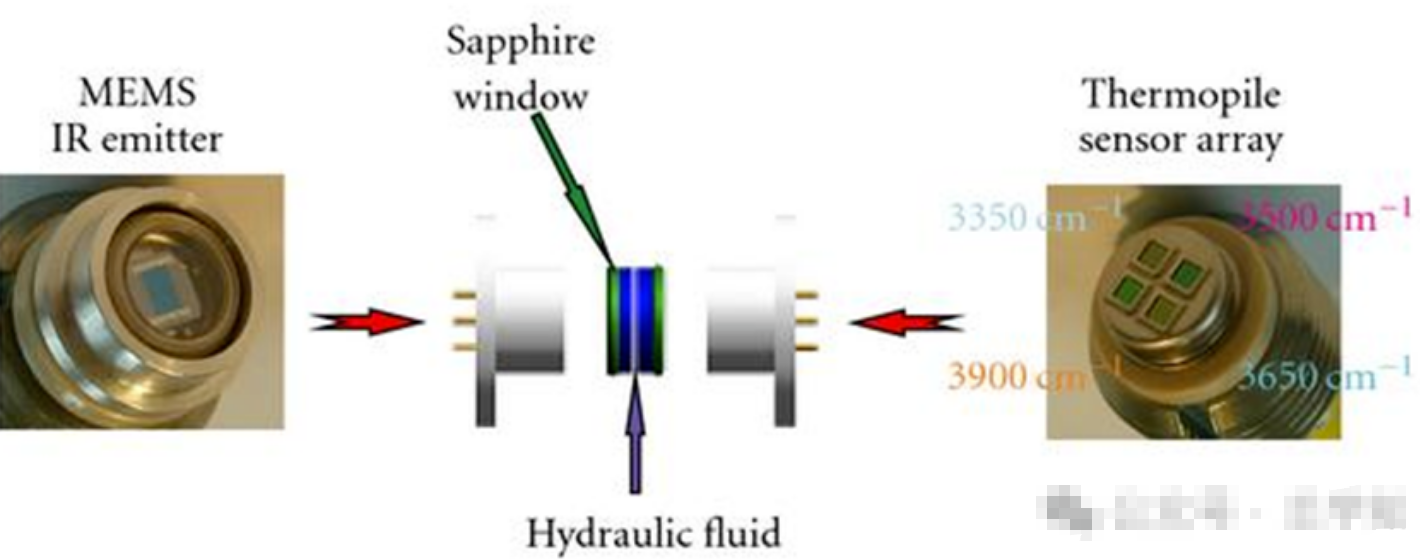
Figure: Schematic Diagram of NDIR Sensor Structure
Share