As power systems accelerate their transition toward greater cleanliness and intelligence, sulfur hexafluoride (SF6) gas finds itself squarely in the spotlight, playing a role that is at once deeply contradictory and absolutely indispensable. On one hand, thanks to its exceptional insulating and arc-quenching properties, it serves as the essential "golden gas"—an indispensable component—within core equipment such as Gas-Insulated Switchgear (GIS) and circuit breakers. On the other hand, it acts as a potent "environmental time bomb": its Global Warming Potential (GWP) is a staggering 23,900 times that of carbon dioxide, and it persists in the atmosphere for an astonishing 3,200 years. Against the backdrop of the deepening pursuit of "Dual Carbon" goals and the full-scale acceleration of digital transformation within power grids, the ability to monitor SF6 gas with precision, in real-time, and with unwavering reliability has evolved beyond a mere technical imperative for ensuring equipment safety; it has become a strategic imperative critical to environmental compliance and a sustainable future.
In this context, the MGS24-SF6 NDIR gas sensor—distinguished by its outstanding performance and robust technical heritage—is emerging as a pivotal sensing node within the power industry's efforts to address the challenges posed by SF6. It serves to construct an intelligent line of defense for high-voltage power environments—including substations, converter stations, and switching stations—that functions simultaneously as a safety barrier and a mechanism for emissions reduction.
I. Challenges and Dilemmas: Why Precise Monitoring SF6 Has Become an Essential Requirement
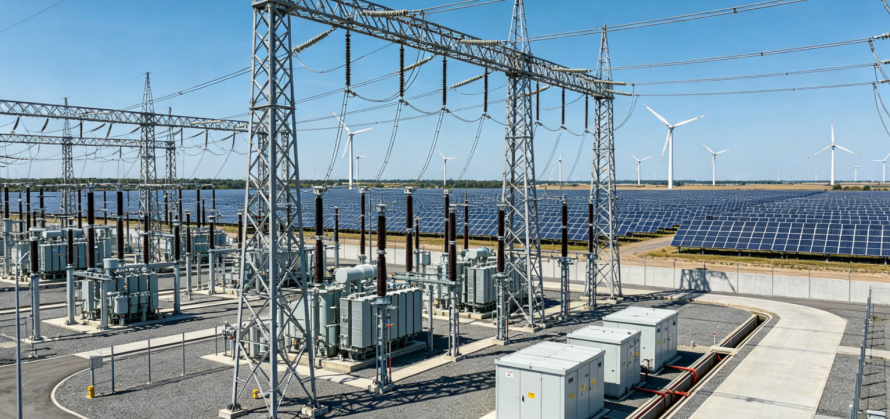
From a technical perspective, the scale of SF6 application within power systems is immense. Statistics indicate that the primary application domain for SF6 lies within the power industry, accounting for approximately 70% of its total usage; high-voltage electrical equipment—such as Gas-Insulated Switchgear (GIS) assemblies and circuit breakers—is predominantly concentrated in fixed locations such as substations and switching stations. However, it is precisely this characteristic of widespread yet concentrated usage that renders the associated leakage risks too significant to be underestimated.
SF6 is colorless and odorless, making it difficult for humans to detect directly in the event of a leak. Should it accumulate in enclosed or poorly ventilated spaces—such as GIS rooms or cable trenches—its density (being five times greater than that of air) causes it to displace oxygen, thereby posing a severe risk of asphyxiation. Concurrently, under the influence of electrical arcing, SF6 decomposes into toxic and corrosive substances—such as hydrogen fluoride—which threaten both the health of maintenance personnel and the safe operation of the equipment. Data reveals that in the Xinjiang region alone, there were as many as 278 reported incidents involving low-pressure defects in SF6-insulated equipment (rated at 110kV and above) during 2023; this has emerged as a prominent latent hazard impacting the stable operation of the power grid.
From the standpoint of environmental compliance, this challenge appears even more formidable. In December 2025, the Ministry of Ecology and Environment and the National Energy Administration officially released the *Methodology for Voluntary Greenhouse Gas Emission Reduction Projects: Recovery and Purification of Sulfur Hexafluoride in Electrical Equipment*. This document effectively fills a critical gap within the national voluntary greenhouse gas emission reduction trading market regarding the sector of SF6-insulated electrical equipment. Consequently, the management of SF6 leakage has evolved from a matter of internal corporate safety management into a carbon emissions management imperative possessing tangible trading value. Thus, enhancing the precision of SF6 monitoring is no longer merely a rigid compliance requirement for power utility enterprises; it has become a prerequisite for their active participation in greenhouse gas reduction initiatives and for realizing financial returns through carbon assets.
II. Core Advantages of the MGS24-SF6 Sensor
In the face of complex monitoring requirements, the selection of an appropriate sensor technology is paramount. Compared to the limitations of other technologies—such as electrochemical sensors being prone to "poisoning" and failure, semiconductor sensors being susceptible to false alarms, and UV ionization technology incurring high costs while being easily disrupted by dust—NDIR (Non-Dispersive Infrared) technology has emerged as the preferred solution for SF6 monitoring within the power industry, thanks to its exceptional stability, selectivity, and longevity.
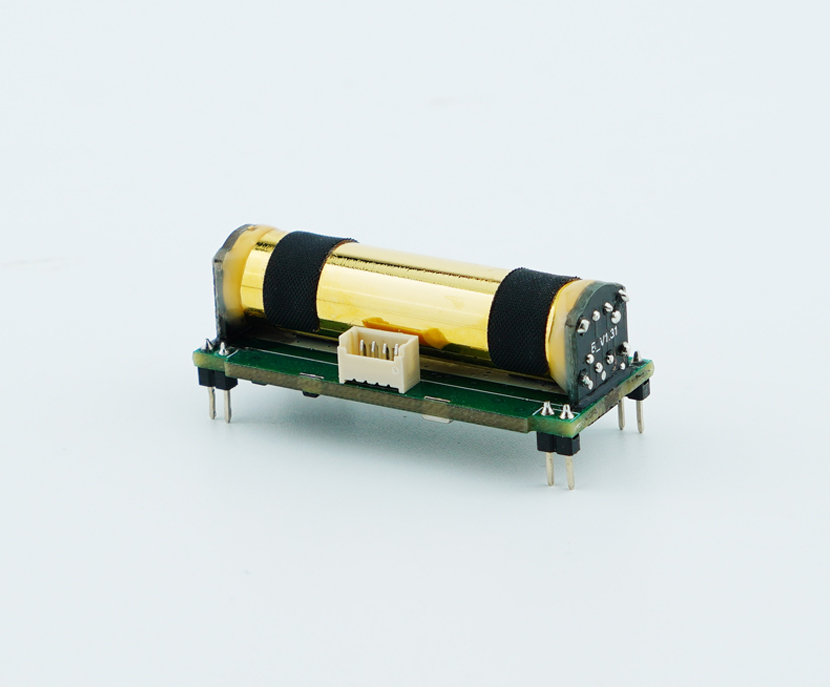
The MFrontier MGS24-SF6 sensor is a flagship product built upon this mature technological principle. By measuring the characteristic absorption intensity of SF6 molecules at a specific infrared wavelength (approximately 10.6 μm), the sensor precisely calculates gas concentration, remaining impervious to interference from environmental moisture, dust, or other gases. Its performance specifications stand out as particularly impressive within the industry:
Measurement Range: 0–5000 ppm, comprehensively covering monitoring requirements ranging from trace leaks to hazardous concentrations;
Measurement Accuracy: Achieves ±50 ppm within the 0–1000 ppm range, and ±150 ppm within the 1000–3000 ppm range, ensuring accurate detection even in high-concentration environments;
Measurement Interval: 1 second, enabling near real-time tracking of gas concentrations;
Response Time: T63 ≤ 12s, T90 ≤ 25s, allowing for the rapid detection of leak events;
Mean Time Between Failures (MTBF): ≥ 10 years, significantly reducing the frequency of maintenance and replacement, making it ideally suited for unattended monitoring scenarios.
Of particular note is the MGS24-SF6's built-in temperature and pressure compensation capabilities. Combined with a gold-plated gas chamber and a high-precision sampling circuit design, these features effectively eliminate the impact of environmental temperature and humidity fluctuations on measurement accuracy, thereby ensuring the output of stable and reliable data even within the complex operating environments typical of power facilities (ranging from -20°C to 60°C and 0% to 95% RH).
III. Advanced Applications: From Centralized Monitoring to Full-Chain Empowerment
The performance advantages of the MGS24-SF6 sensor have been fully validated across a diverse range of application scenarios within the electric power industry. Its value extends far beyond mere "alarming"; rather, it is deeply embedded within the entire operational and maintenance lifecycle of power equipment.
The First Line of Defense: Fixed Online Monitoring Systems. In high-risk areas—such as GIS switchgear rooms and converter station valve halls—fixed online monitoring systems built upon the MGS24-SF6 sensor constitute the primary safety barrier. Deployed via wall-mounted units or duct-sampling mechanisms, these systems continuously collect real-time data on ambient SF6 concentrations. Should the concentration exceed the safety threshold of 1000 ppm, the system immediately triggers synchronized audible and visual alarms and activates ventilation fans to initiate forced air exchange. This threshold aligns closely with national standards regarding concentration limits for SF6-handling environments; furthermore, the system facilitates seamless data integration with SCADA systems and IoT cloud platforms, enabling O&M personnel at a central control center to exercise centralized oversight of SF6-related environmental risks across the entire power grid.
The Second Line of Defense: Intelligent O&M and Predictive Maintenance. The sensor's true value lies not merely in providing immediate alerts regarding leaks, but—more importantly—in leveraging long-term accumulated data on concentration trends to provide a robust basis for decision-making in the predictive health management of power equipment. Under traditional maintenance paradigms, manual inspections are infrequent, offer limited coverage, and suffer from significant data latency. In contrast, online monitoring systems powered by the MGS24-SF6 sensor can elevate inspection frequency from a monthly basis to a daily one. Through continuous tracking and trend analysis, these systems can proactively identify aging trends in vulnerable components—such as flanges, valves, and welded joints—thereby eliminating potential safety hazards at their incipient stages.
The Third Line of Defense: Handheld Leak Detection and Emergency Response. Portable leak detectors incorporating the MGS24-SF6 sensor core address a critical pain point associated with fixed systems: the inability to pinpoint the exact location of a known leak. Equipped with these handheld devices, O&M personnel can conduct close-range, scanning inspections along the critical nodes of GIS equipment, thereby isolating the precise source of a leak—down to a specific valve or flange—within a remarkably short timeframe. Compared to the traditional soap-and-water method, modern handheld NDIR detectors can boost leak detection efficiency by over 90%. During emergency responses to sudden alarms, these devices enable the rapid inspection of critical areas throughout the facility, thereby securing a valuable window of opportunity for gas replenishment and troubleshooting.
IV. Dual Benefits—Economic and Environmental: Enabling SF6 Monitoring to Create Tangible Value
The precise monitoring capabilities delivered by SF6 sensors are generating tangible and quantifiable dual benefits—both economic and environmental—for power utility companies.
From an economic perspective, the early detection and localization of leakage points prevent equipment failures—or even power outages—that might otherwise result from insulation breakdown caused by insufficient gas levels. The costs associated with repairing a major equipment failure—including repair expenses, lost electricity revenue, and broader societal impact—often far exceed the initial investment required for sensors and monitoring systems. Furthermore, the efficient gas management enabled by precise monitoring significantly reduces the need for unnecessary SF6 replenishment purchases and extends the gas's operational lifecycle, thereby realizing direct savings in operating costs.
From an environmental perspective, the introduction of methodologies for SF6 recovery and purification has made the concept of "monetizing emissions reductions" a reality. Through continuous concentration monitoring and leak recording, enterprises can accurately calculate the average annual SF6 leakage rate at the individual equipment level, thereby establishing a credible data foundation for participating in CCER (Certified Voluntary Emission Reduction) trading schemes. Concurrently, monitoring facilitates the maximization of SF6 recovery and reuse, thereby reducing the demand for new SF6 production at the source. This approach allows companies to generate revenue from emissions reductions while simultaneously lowering their carbon footprint—achieving a win-win outcome that balances economic gain with environmental and social responsibility.
V. Future Outlook: SF6 Sensors Driving a New Paradigm in Power Safety
Looking ahead, the role of SF6 sensors is set to evolve continuously from "passive alarming" to "active diagnostics." As smart grid and digital twin technologies advance, the importance of sensors—acting as front-end sensing elements that capture the "vital signs" of the power grid—will become increasingly pronounced. Market data corroborates this trend: the global SF6 sensor market reached a value of $335 million in 2025 and is projected to grow to $452 million by 2032, representing a Compound Annual Growth Rate (CAGR) of 4.38%; throughout this trajectory, the power industry has consistently remained the primary driver of demand.
On the technological front, sensors are evolving toward greater miniaturization, lower power consumption, and multi-parameter integration. The utilization of MEMS technology is enabling further reductions in sensor size, thereby meeting the requirements for embedded deployment within compact power equipment. Furthermore, by integrating SF6 concentration sensing capabilities with measurements for temperature, humidity, and pressure into a single module, these advanced sensors facilitate more comprehensive equipment health monitoring at a lower overall system cost. At the data application level, the integration of edge computing and AI algorithms will enable sensor data to do more than merely "report"—it will empower it to "think," automatically identifying risk trends and assisting in operational dispatch decisions.
Amidst the sweeping tide of the global energy transition, SF6 gas will not be exiting the stage of the power system anytime soon. The true value lies not in avoiding it, but in utilizing precise, intelligent sensor technologies to minimize its risks while maximizing its utility. The MFrontier MGS24-SF6 sensor serves as the solid foundation for this mission at the sensing layer—silently safeguarding safety, contributing to sustainability through meticulous detail, and ensuring that every monitoring instance generates tangible, real-world value.
Share