It is a heartbreaking fact that when the outside temperature is only 25°C, the temperature inside a closed car under direct sunlight can soar to over 50°C within 20 minutes. Children, infants, and pets have far weaker thermoregulation abilities than adults, and if left inside a car, they could die from heatstroke within a short time. In recent years, incidents of children being forgotten in cars and resulting in injury or death have been frequent both domestically and internationally. Some regions have enacted regulations mandating that new cars be equipped with in-vehicle life-altering alarm functions.
However, traditional monitoring solutions have significant shortcomings. Ultrasonic radar and millimeter-wave radar are currently the mainstream technologies, but their physical principles dictate that they cannot reliably distinguish between "living beings" and "objects"—a child wrapped in a blanket, a child lying in a specific sleeping position in a car seat, or an infant obscured by a car seat may all be misjudged as "inanimate objects" or missed entirely by the radar. Such a missed detection can mean the difference between life and death in a critical moment.
Thermopile Array: Precisely Distinguishing Living from Non-living Beings
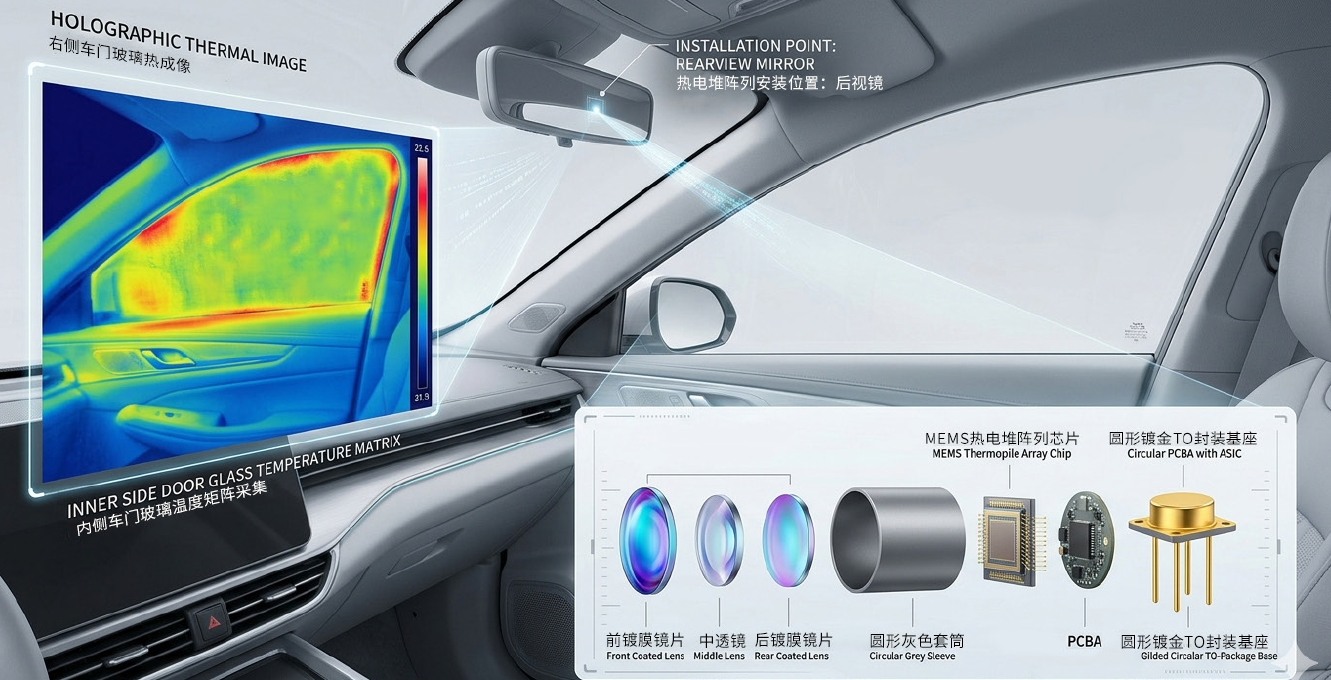
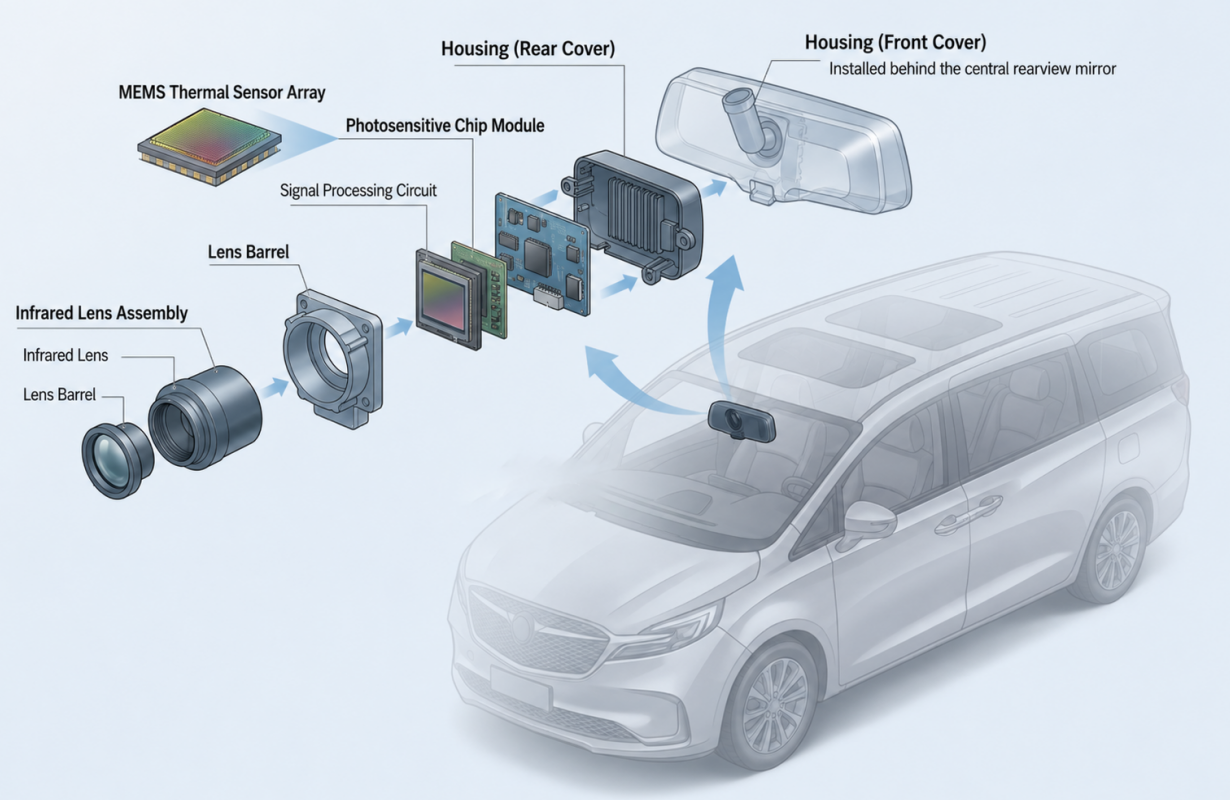
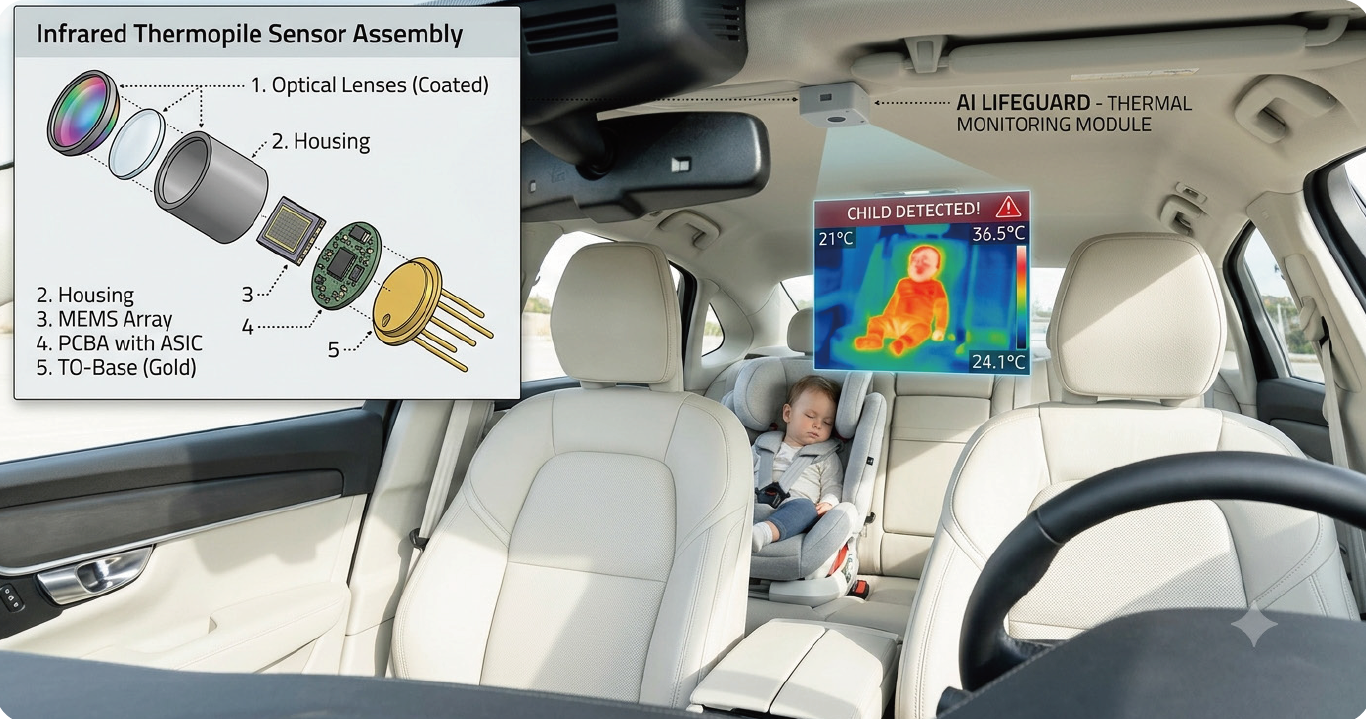
The MFrontier infrared thermopile array sensing system addresses the problem from the perspective of "temperature," offering a more reliable solution. The sensors collect real-time data on the overall temperature field distribution within the cabin, measuring not only ambient temperature but also accurately identifying any traces of life through thermal imaging image recognition technology. Its core capabilities include:
Precise Distinction: Seats, objects, clothing, and living beings exhibit distinctly different temperature characteristics and outlines in thermal images, allowing the system to accurately classify them and fundamentally eliminate false alarms and missed detections.
Strong Anti-interference: Unaffected by external factors such as light blockage, sleeping posture, stillness, or heavy coverings—even if a child is covered by clothing or a blanket, their body temperature will still radiate through the covering and be clearly sensed by the thermopile array.
Stationary Target Detection: Unlike pyroelectric sensors that can only detect moving heat sources, the thermopile array can reliably detect stationary or sleeping occupants, which is a typical scenario for children left behind.
Multi-level Joint Response Mechanism
Once the system detects life left inside the vehicle, it immediately initiates a tiered response.
Level 1: Triggers in-vehicle audible and visual alarms and hazard lights to alert nearby personnel.
Level 2: Activates air conditioning or automatically lowers windows to provide fresh air and cooling to the trapped occupants.
Level 3: Pushes an emergency alert message via a mobile app, notifying the owner to return and handle the situation promptly.
In some models supporting advanced control, the system can also automatically open windows for ventilation, minimizing the risk of an accident before the owner arrives, thus building a final line of defense for the safety of those inside the vehicle.
Share